yes, ive followed yoko taro’s whole game series more or less. i find the drakenier universe pretty fascinating, which i guess explains some about why even the worst parts of homestuck dont really mess me up or make me TOO sad for the most part
Hussie Quote: “Watching the kids figure out ways to hack the game is about as important to the story as watching them figure out how the game itself works in the first place. This is because the story is first about the game and the subversion of the game, and then about the narrative and the subversion of that narrative.”
OP: Wait a second, haven’t you been saying that all along? :O
I hadn’t thought about it as a direct progression from Game to Narrative, but in the sense of the story ultimately being about subverting the story/LE as author? Yeah kinda, which is pretty gratifying. He mentioned platonic idealism directly a couple of times, which was also pretty vindicating.
According to inversion theory, a rogue would’ve inverted into Knight. I switch Knight and page, so I guess rogue would invert into page in my model
Buuut I don’t use inversion theory at all in my analysis, since I don’t feel it has as much grounding in canon as roleplay, which seems both more versatile and more robust to me.
OP:Hey, I thought I’d share this commentary I saw in book 3 about [S] Jack: Ascend, because I thought you’d probably find it as interesting as I do (also it’s too big for an ask so I have to do it as a submission sorry):
Hussie quote: “[…] I think this one marks the start of Homestuck’s trend thereafter of dropping exceptionally violent, high-octane, game-changing animations out of nowhere. There are so many like this from on, right up to the end of Act 5. Only then does the number sort of taper off. But from this point on I just sorta started shoveling more and more red meat into the story’s maw. This stretch is where I was starting to get a feel for this type of sensationalistic storytelling content as something I’d later code (mostly for my own internal purposes) as “meat,” in the meat/candy binary of storycraft theory. I really shouldn’t talk about this yet, though. It’s too soon.”
This quote threw me for a loop, to be honest, and I’ve been mulling it over the last couple days. I wasn’t sure what the Meat/Candy binary was referring to at all, I was just kind of like uhh wtf?
Then I remembered this exchange, and I think things started coming together:
Meat and Candy are all Caliborn/Calliope eat. Which makes sense, since they’re the ultimate audience stand ins. Hussie gives us a good sense of what Meat means in his description: Very violent, very game-changing animations that move the story forward. Parts where people die and/or Get Shit done, usually delivered with a lot of visual spectacle.
Caliborn gives us a pretty hefty clue as to the second. Odds seem good “Candy” refers to shipping, or at least the very particular kind of shipping Caliborn is interested in.
Which is to say, Caliborn isn’t interested in watching Roxy and Jane have a real relationship, or grow as people, or wrestle with real feelings. He’s interested in the physical titillation they can provide him with by acting out the cute parts of a relationship. See also: Trickster Mode, where the characters indulge candy and become saccharine sweet and affectionate to each other while being entirely detached from their conflicts and issues.
Unsurprisingly, Caliborn’s also only interested in “candy” that caters specifically to his own sexuality, insofar as he consciously performs it.
So basically, Meat and Candy both provide different forms of titillation and satisfying “content”, from the fandom’s perspective. Meat gives us raw plot, the satisfaction of Things Happening, steaks being raised, etc. Candy gives us shipping fodder, absent conflict and growth that real relationships require.
This log also introduces a third concept into the equation, presenting an alternative to the Meat/Candy binary: Pumpkins, or Vegetables.
The implications of this one seem fairly obvious to me. Vegetables may not be tasty or satisfying to eat, but they’re good for you and necessary to a healthy body. Eating one’s vegetables is considered a sign of maturity, or at least being on the path to maturity.
I’m going to guess that in this framework, vegetables refers to content depicting the characters actually reckoning with themselves, facing their feelings and flaws, and growing as people, friends, and relationship partners. This is explicitly built into Dirk and Jake’s relationship symbolically, but really it applies to every endgame ship and to the character’s arcs more generally. Caliborn doesn’t give a shit about anything that has to do with the characters actually growing up.
Pumpkins are also Void items, which makes me wonder. If the most “important” romantic relationships for each character, the ones that help them grow as people, are the ones considered “Pumpkin” matter in the story, maybe that goes some way to explaining why we get so little explicitly romantic affection shown between, say, Vrisrezi, Davekat, and Dirkjake. That’s candy.
If that last idea is accurate to the story’s internal logic, it makes me think of this quote from The Little Prince:
It is only with the heart that one can see rightly; what is essential is invisible to the eye.
Anyway if I’m right about this at all, the real takeaway is that @sam-keeper was writing about this aspect of Homestuck openly way back in 2016. So, you know. Homestuck was good and meaningfully constructed all along, and everyone should listen to Sam forever. What else is new.
If I can just add to this, I think the “meat” is not just things happening, but also implied to be as unhealthy (and ultimately empty of value) as candy when eaten in excess. It’s violence and spectacle.
A lot of valuable character development in HS takes place off camera. Even relatively important things, particularly frog related ones, are only tangential, implied. They aren’t spectacle though. Mostly they’re very important but not especially interesting events, neither meat (violent, suspenseful, shounen) or candy (sweet, emotional, shoujo). They’re just people doing stuff, pumpkin style.
This is real good, I especially like adding the shonen/shoujo codings to these. Thanks 😀
OP:Hey, I thought I’d share this commentary I saw in book 3 about [S] Jack: Ascend, because I thought you’d probably find it as interesting as I do (also it’s too big for an ask so I have to do it as a submission sorry):
Hussie quote: “[…] I think this one marks the start of Homestuck’s trend thereafter of dropping exceptionally violent, high-octane, game-changing animations out of nowhere. There are so many like this from on, right up to the end of Act 5. Only then does the number sort of taper off. But from this point on I just sorta started shoveling more and more red meat into the story’s maw. This stretch is where I was starting to get a feel for this type of sensationalistic storytelling content as something I’d later code (mostly for my own internal purposes) as “meat,” in the meat/candy binary of storycraft theory. I really shouldn’t talk about this yet, though. It’s too soon.”
This quote threw me for a loop, to be honest, and I’ve been mulling it over the last couple days. I wasn’t sure what the Meat/Candy binary was referring to at all, I was just kind of like uhh wtf?
Then I remembered this exchange, and I think things started coming together:
Meat and Candy are all Caliborn/Calliope eat. Which makes sense, since they’re the ultimate audience stand ins. Hussie gives us a good sense of what Meat means in his description: Very violent, very game-changing animations that move the story forward. Parts where people die and/or Get Shit done, usually delivered with a lot of visual spectacle.
Caliborn gives us a pretty hefty clue as to the second. Odds seem good “Candy” refers to shipping, or at least the very particular kind of shipping Caliborn is interested in.
Which is to say, Caliborn isn’t interested in watching Roxy and Jane have a real relationship, or grow as people, or wrestle with real feelings. He’s interested in the physical titillation they can provide him with by acting out the cute parts of a relationship. See also: Trickster Mode, where the characters indulge candy and become saccharine sweet and affectionate to each other while being entirely detached from their conflicts and issues.
Unsurprisingly, Caliborn’s also only interested in “candy” that caters specifically to his own sexuality, insofar as he consciously performs it.
So basically, Meat and Candy both provide different forms of titillation and satisfying “content”, from the fandom’s perspective. Meat gives us raw plot, the satisfaction of Things Happening, steaks being raised, etc. Candy gives us shipping fodder, absent conflict and growth that real relationships require.
This log also introduces a third concept into the equation, presenting an alternative to the Meat/Candy binary: Pumpkins, or Vegetables.
The implications of this one seem fairly obvious to me. Vegetables may not be tasty or satisfying to eat, but they’re good for you and necessary to a healthy body. Eating one’s vegetables is considered a sign of maturity, or at least being on the path to maturity.
I’m going to guess that in this framework, vegetables refers to content depicting the characters actually reckoning with themselves, facing their feelings and flaws, and growing as people, friends, and relationship partners. This is explicitly built into Dirk and Jake’s relationship symbolically, but really it applies to every endgame ship and to the character’s arcs more generally. Caliborn doesn’t give a shit about anything that has to do with the characters actually growing up.
Pumpkins are also Void items, which makes me wonder. If the most “important” romantic relationships for each character, the ones that help them grow as people, are the ones considered “Pumpkin” matter in the story, maybe that goes some way to explaining why we get so little explicitly romantic affection shown between, say, Vrisrezi, Davekat, and Dirkjake. That’s candy.
If that last idea is accurate to the story’s internal logic, it makes me think of this quote from The Little Prince:
It is only with the heart that one can see rightly; what is essential is invisible to the eye.
Anyway if I’m right about this at all, the real takeaway is that @sam-keeper was writing about this aspect of Homestuck openly way back in 2016. So, you know. Homestuck was good and meaningfully constructed all along, and everyone should listen to Sam forever. What else is new.
Far as I can tell, they line up roughly, with some areas of
overlap and some archetypes that seem to apply to one or two classes
simultaneously–usually Active/Passive pairs, notably. But I’m
not exactly 100% sure the one is based on the other at the moment. It’s
close enough to be extremely useful to me, but messy enough that I’m
not inclined to call it literal canon.Also, it’s worth noting
Roleplay blurs the lines on the Class end. IE: When a player roleplays a
Rogue, they end up taking on traits/struggles associated with the
Lover. Rose and Tavros both do this at different points. Here’s a list of correspondences, as I see it:
Sage-Mage, Seer Magician-Heir, Witch Ruler- Muse, Lord, weirdly the Witch kinda jives with some traits here too Fool/Jester- Bard/Heir,
which is pretty odd too. But then, John and Gamzee are both explicitly
linked to fools and jesters quite notably, so as odd as it is, it
lingers.
i’m not sure I think of the classes as having “quests”, so much as symbolic motifs and core personality struggles.
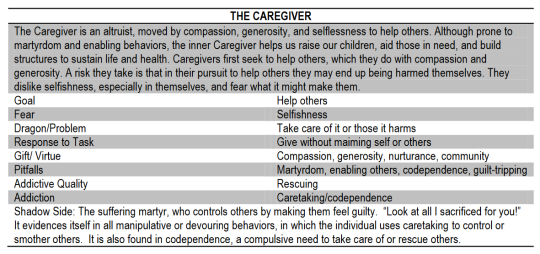
I’d say the Sylph’s symbolic motif seems to be to embody the role of a fairy/elemental of their aspect. that can manifest as any member of the “fae”, ie: imaginary creatures. Vampires, demons, literal fairies, angels and the like. As for their personality struggles:
I think this captures the Sylph pretty succintly. Kanaya showcases the addiction to caretaking and codependence more, while Aranea tends to fall more into the Suffering Martyr angle (while we’re at it, so does Vriska), so yeah thats my take


 Flying through Storytelling