Hey guys! This time we take a look at the Dreaming World. We take a look at the way the Dreamselves of the players serve as useful tools to both the Players and the Game itself. We also learn about the warring kingdoms of Prospit and Derse, how their distinct cultures rub off on and affect the players, and how they relate to the different Gods that influence any given session of Sburb.
Hey, Duelist! It’s Powerhouse, here to hoot at you from another platform.
Here are my two cents: in the WOG quoted, Hussie presents the idea that Vriska’s situation is a more egregious version of Karkat’s.
As a Prospit dreamer, did Karkat struggle because he was actually passive in nature, but had a very active self image as a leader and conqueror? Was Vriska an even more extreme case of misplaced active behavior from a Prospit dreamer?
(Aside: this is a bit of a strange point to make, considering that Vriska generally appears very far from passive… but maybe that’s the point, to help us grasp that there is something passive about Vriska’s nature that most people miss on first read. I wonder what that could be?)
Asides aside, knowing that Thief is active, the description of Vriska as a more extremely misplaced Karkat could suggest that Knight is active too– and it might even give us some extra information about the relative placement of Knight and Thief on the active side of the scale (i.e, that Thief might be more active than Knight).
Hussie does stick to weasel words and hedging techniques in this WOG, for instance phrasing these points as questions, but interpretations that rely on Hussie deliberately trying to mislead the audience of this post (through lies of omission or otherwise) can quickly lead us into a destructive cycle of doubt. If even one idea raised here can’t be taken at face value, there is no way to be sure that the others can: it makes sense to me to stick to the face value and try to glean meaning from that.
It’s also probably worth pulling back a bit and reading the entirety of the quoted paragraph.
Terezi and Karkat, one of which could have been roleplaying a Knight, while the other was a Knight, were linked with the colour white – although in Flip it was only the glasses for Terezi (and wings for Vriska). What are your thoughts on that? (22)
Thanks for the ask! And for the insight. This might well be a solid point in favor of reading Knights as Active.
Being from Derse means you are from a culture of offense and aggression.
Being from Prospit means the opposite. You could argue that these are
qualities that either rub off on the dreamers, or they are designated as
those dreamers in the first place because of those qualities. You could
take the view that these are innate tendencies to overcome, as seemed
to be the case for Jade and Rose. Or maybe sometimes they are tendencies
that are resisted, and need to be understood and embraced.
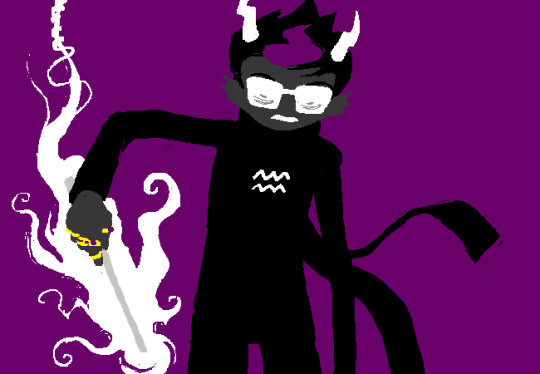
What Hussie seems to be getting at here is that moons are somehow indicative of innate tendencies in players that can exist outside of their class’s “intended” goals– tendencies towards being active or passive independent of whichever one the player’s class is. So as the Prospit-dreaming Vriska struggles to ignore her innate passivity, the Derse-dreaming Meenah may be convinced to resist her innate activity and only return to it once she’s had some kind of epiphany.
(Feel free to repeat that in your head with Karkat and Dave.)
The question then becomes, in cases where you don’t know what someone’s class is supposed to mean, how are you supposed to tease apart their moon tendencies from their class tendencies… and whether they’re supposed to resist their moon or embrace it?
I think the starting point here is the idea that your moon indicates the culture that you “come from”. If the moon indicates one thing, shouldn’t the class indicate another?
Heya! I hadn’t realized I already followed you, I’m pleasantly surprised. This got a bit long so my response is under the cut.
I do think moon and class indicate different things entirely, and that a player’s Class is the biggest sign of what active/passive state they’re healthiest/happiest/most comfortable in. Essentially, it’s their “true self”–a set of instincts they can’t really change about themselves.
I read the way Hussie describes the moons fairly literally, then. It’s less that they’re indicators of some Secret Tendencies of the players–though they can be that, more on Vriska and Karkat in a minute–and more that they’re environmental influencers. They pull a sort of “gravitational weight” on their Players when those Players dream on them, subtly tugging one way or another.
This also sort of suggests why moons might affect some players more than others. The amount a player spends actually dreaming on the moon might well matter! Rose, Jade and Dave all spent a lot of time awake on their respective moons, and exhibited strong Moon influences as a result.
Hussie describes Karkat as being alienated from his own more Passive nature, and Karkat actually barely dreams on Prospit at all. That said, since the only thing we can tell for sure from this section is that Thief is probably more Active than Knight, I don’t necessarily agree that this suggests Knights are Active. On the contrary, I think it’s likelier it suggests the opposite.
Hussie describes how Rose and Dave start off their sessions very Active here and talks about how Rose’s god tiering leads her to embracing a more Passive role. Similarly, he suggests that Karkat’s self-image is overly Active, implying he’d be better off adopting a relatively more passive role.
Which he does. Since Hussie doesn’t mention it, it kind of gets lost in the weeds that Dave and Karkat’s arc progression pretty much mirrors Roses’, since both of them grow more passive further into the meteor journey.
If future developments suggest that it’s healthier for Dave and Karkat to take up more Active roles in the future, then that’ll change stuff for me, but I think it’s fairly clear that Dave and Karkat get happier and more comfortable the more they focus on their relationship with each other, as opposed to on their own self-images and the responsibilities they bring.
It is possible the Knights are Active and just meant to be Somewhat Less Active, like Vriska. I just don’t think this tract of text tells us either way. While we’re talking about her, though, I do think we learn what it means for Vriska to embrace her Prospitian nature, too.
It looks like (Vriska), basically. She’s happiest focusing on herself–and she needs the focus to figure out that mess–but she spends a lot of her narrative either focusing on empowering others, or considering the existential needs of all of the hypothetical beings in causality above her own.
This ultimately holds Vriska back in terms of personal development, even if it makes her effective at adventuring. (Vriska) becomes more passive behavior-wise, relative to the intense action that mindset brings about, but she is more focused on her own benefit and her own feelings, which is a genuinely healthier place for her to be.
Essentially, she stops trying to be Mindfang and starts trying to be herself. As a result, she’s able to form a genuine connection with Terezi as an equal, and symbolically gain enlightenment.
Terezi and Karkat, one of which could have been roleplaying a Knight, while the other was a Knight, were linked with the colour white – although in Flip it was only the glasses for Terezi (and wings for Vriska). What are your thoughts on that? (22)
Thanks for the ask! And for the insight. This might well be a solid point in favor of reading Knights as Active.
I honestly don’t know if this scene is meant to convey this kind of Yin/Yang stuff, tbh? That said, Vriska’s roleplaying a Sylph, which is one of the most passive classes. So this wouldn’t match the imagery either way.
Karkat and Gamzee here might certainly back up the view, though. Karkat’s in white, clear as day.
I should mention Karkat and Gamzee here would probably still check out, either way. Bard is one of the most passive classes, and Karkat is the one about to take action here–he’s simply more Active than Gamzee is, at the present moment.
And in the very next shot, the colors invert. And this isn’t the only time just the signs are used to denote Active/Passive status, I don’t think?
So things seem a little muddled to me right now. I suppose I should tip my hand a bit and say that, if I seem hard-headed in talking about how nuanced this is, it’s only because I’m weighing this section of Karkat’s arc with literal word of god in mind.
I’m talking about this bit of a post on Active/Passive dynamics Hussie posted on Tumblr, back in the Good Old Days oh god i’ve been in this fandom so long…:
Being from Derse means you are from a culture of offense and aggression. Being from Prospit means the opposite. [..]
[…] Or maybe sometimes they are tendencies that are resisted, and need to be understood and embraced. As a Prospit dreamer, did Karkat struggle because he was actually passive in nature, but had a very active self image as a leader and conqueror?
Was Vriska an even more extreme case of misplaced active behavior from a Prospit dreamer? These are yet more things to consider when looking at everything contributing to the hero story of an individual in this game.
So there’s that. Karkat and Dave certainly echo Rose’s arc of starting off miserable and quite Active, and slowly growing happier as they adopt more passive roles. So I’m not sure what to think here, but I have to admit, I’m genuinely swayed.
Basically the Active Knight reading ignores the fact that, like Rose, Dave and Karkat START OFF trying to be intensely Active but gradually mellow out and grow happier as they adopt more passive/reactive roles and become more honest about their desire for attention and validation from others (for Rose, mainly Kanaya and Roxy. For Dave and Karkat, mainly each other, tho Dave also struggles with a desire for reconciliation/catharsis with Bro/Dirk on the side).
More importantly, it misses all the ways they allow/invite their Aspect (Karkat dropping Sollux down the stairs drawing Sollux’s Blood and leading to Sollux being happier is a clear example.) and pigeonholes our understanding of their behavior as being exclusively Exploitation focused because of that one quote of Aradia’s, despite the fact that every single Class both exploits and allows their Aspect–Calliope’s definition describes a tendency, not a limitation of their powersets.
It also ignores how Knights’ greatest impacts tends to be how their efforts benefit and empower others. Karkat allows the troll session to function at all by keeping everyone bound to a common cause and leading them to victory instead of self-destruction through petty rivalries. Dave empowers Rose, Jade and John to do literally any of what they do in their session at all by making Grist cost a complete non-issue, allowing them to make whatever kinds of powerful weapons they want. Davesprite literally buffs John by giving him a hammer with Time powers!!! The Active reading of Knights misses all of that stuff.
As for Passive Pages, I wouldn’t know where to start. Every shitty reading of Jake as a kind, patient soul cruelly Put Upon by his predatory gay friend. Every dumbass take that Tavros is boring because he’s just a lame pushover, instead of an abused kid who resists and fights his abuser’s pressuring influence every step of the way, and who usually knows pretty well who to ask for help to stop her!
All of them are grounded in this idea of the Page as a Passive wallflower nobody with zero impact on Homestucks’ plot to speak of, except of course for how they are mistreated by others.
The powerset of a Page in development, if you listen to the Passive reading, seems to veer between ??? and “Nothing much”, since they’re regarded as p much a burden who must be carried through the game by everyone else until the day they finally reach their True Power, which is presumably buffing everyone else until the whole team is super saiyans.
This is a day that never comes in canon, for any Page. Instead, we get Jake feeling sexually threatened and objectified and summoning a mental version of his boyfriend spouting quotes from a romantic comedy-adventure movie (which is way more Jake’s bag than Dirk’s).
Not to mention BGD talks about Jake as his boyfriend while Dirk himself broke up with Jake and is simultaneously flying around in literal nowhere with no idea what’s going on.
The Brain Ghost Dirk episode is about Jake benefiting HIMSELF with his Hope. Think about his level of power and the context surrounding it.
Aranea wanted to use Jake’s Hope power to benefit herself, and he immediately summoned a warrior for the sole purpose of turning said power against her. His power is definitely not for her benefit.
It’s not for the benefit of anyone else in the session, either, because Jake doesn’t do jack shit about the Condesce as a threat despite having more than enough power to. Jake isn’t thinking about the good of the session or fixing everything so everyone is safe and conflict is resolved, all of which is stuff he could accomplish with a power level exceeding Jade’s.
Jake is only thinking about himself and wanting to feel safe, and Dirk is how he gets there. The fact that the fandom has missed that rests on the assumption of the Passive Page.
Ditto Tavros’ big moment–rallying the Ghost Army–being cast as a shitty moment where he character develops by getting to help his abuser instead of being a cathartic beat where he gets to own her as revenge because that’s all he wants–to prove her wrong definitively and get on with his life. Or ghost-life, or whatever. Homestuck is dumb, I love it.
I could make similar complaints about Karkat and how everyone thinks he got shafted because he never Got Tough and started fucking shit up with Blood-lasers or whatever. Karkat uses Blood constantly, all the time, and he’s extremely successful and effective at leveraging it. He just does most of it indirectly.
I have a lot of thoughts about this, as you can tell. All this said, it’s possible I’m just straight up wrong about what it means to be Active/Passive and canon will clarify once the Class test happens. Until then though, I’m gonna work with what I have, and it seems to me Homestuck as a work reads much better with one interpretation over the other.
[2]Then wouldnt it follow that princes/bards and sylphs/maids would switch places with the heirs/witches and mages/seers
Hrmmm, I see what you’re saying. I was going off this quote from Calliope:
Along with the distinction of Lords as “Most Active” and Muse as “Most Passive”.
My logic was that the more intensely Active/Passive classes had more dramatic impacts on their sessions, while the less Active/Passive classes were more versatile and able to switch back and forth from Active to Passive easier, making them more flexible.
The Master Classes, then, have the best of both worlds–they can have incredibly high impacts like the far-end classes, but they can also reap the benefits of both Exploiting and Allowing their aspect as necessary like the closer ones.
But that may be inaccurate. I think we’re getting closer, but I’m not sure we’ve “figured out” all the nuances of the Active/Passive scale. There’s a couple things that are still puzzling me, and questions like this one shaking or playing with the model are definitely helpful for helping us figure things out.
I don’t necessarily have any thoughts on this right now except that I’d like to hear how you account for Princes being positioned close to Lords in the scale. I don’t think you’re necessarily wrong, I feel like I’m missing stuff in my model. I’m just not 100% sure how to square this with the evidence we’ve got in canon.
Any thoughts?
If Lord being a very active class places them on the far side of the scale, then Witch (which Hussie says is “said to be a highly active class”) should also be towards the active end of the scale instead of the middle?
hrrrrm, yeah. My logic I wish I could find something in the text that helped us at least figure out how the structure works :[ I think we’re starting to understand what the spectrum means, but I’m not even sure that class pairs would be placed on it symmetrically.
All I can figure is that Witches are said to be highly active in context with all of the classes, including Passive ones? My mindset being that If they’re as active as, say, Princes, then I have to wonder why they don’t seem to struggle QUITE so dramatically when they’re in a Passive state, and why they seem to have an easier time switching back and forth.
It’s quite possible my train of thought wrt how to understand the classes in this regard is completely off, but I’d like to see alternate interpretations for how to understand the classes more holistically to counter the view, if that makes sense.
Hmm ok. Unfortunately holistic doesn’t come very naturally to me, as I’m more of a bottom-up (vs top-down) kinda thinker and I prefer to throw details at each other in the hopes that some conclusion will fall out eventually, maybe after a few years or so. Unifying myths or some other overarching key idea that Hussie included to clue us into the system is not an assumption I’m willing to throw into that mix so readily.
So here I am again, back to niggling at those details. Specifically, you mentioned classes at either ends of the active/passive scale have the worst and the most unhealthy difficulty if/when they attempt to swap to the other side, and you’ve defined the destroy/create classes as the very ends of the scale. But Dirk’s swap to a passive Knight doesn’t seem to be a bad thing for him, by your analysis? It demonstrates Dirk’s deep love for Jake and his friends, or something like that, and he even gets immortalized in Grandpa’s memories as a knight.
Additionally, I’d like to suggest that destroy/create are the classes who actually swap with each other as a matter of course, since destroying an aspect creates its opposite and vice versa. (This is again by your theory, according to that post a while ago where I argued that destroying Hope doesn’t automatically create Rage or vice versa? Although I don’t know if that’s a theory you still hold.)
Obviously there’s a lot of fine tuning required, but if you’re looking to shake up your class scale then this might be somewhere to start?
All kinds of thinking are useful to understanding Homestuck, imo! I hope I didn’t come off as talking down or anything, i was just trying to explain how I typically think about this stuff.
Yeah, I regard Dirk as a unique exception to the general trend of Roleplay Being Bad For You. The main thing that enables this is that Pages naturally invite Knight-like behavior in other classes, and Jake is a Hope player, which enables some good old powergamer cheating, of the sort that successful Sburb players often use.
AR would actually be a pretty good example of unhealthy roleplay. Like Dirk, he ends up roleplaying permanently, but his Knight imagery is decidedly darker: after his heroic sacrifice to save the alphas and stop Caliborn, he spends like, an eternity as LE’s personal Butler, serving for LE’s benefit for like, forever.
Which sucks and I hope AR is revived or something but, you know. It fits the mold.
As for that theory, I think you kind of swayed me back then? In that lately I think it’s more flexible. Like for example AR destroys Heart by getting Dirk to kill himself, but that doesn’t really result in the creation of Mind?
But I will admit I’m pretty tired and might be misunderstanding you. To be clear, you’re suggesting that a Prince of Heart will typically tend to act like a Sylph of Mind, and vice versa, simply due to the inverse meanings of their verbs?
[2]Then wouldnt it follow that princes/bards and sylphs/maids would switch places with the heirs/witches and mages/seers
Hrmmm, I see what you’re saying. I was going off this quote from Calliope:
Along with the distinction of Lords as “Most Active” and Muse as “Most Passive”.
My logic was that the more intensely Active/Passive classes had more dramatic impacts on their sessions, while the less Active/Passive classes were more versatile and able to switch back and forth from Active to Passive easier, making them more flexible.
The Master Classes, then, have the best of both worlds–they can have incredibly high impacts like the far-end classes, but they can also reap the benefits of both Exploiting and Allowing their aspect as necessary like the closer ones.
But that may be inaccurate. I think we’re getting closer, but I’m not sure we’ve “figured out” all the nuances of the Active/Passive scale. There’s a couple things that are still puzzling me, and questions like this one shaking or playing with the model are definitely helpful for helping us figure things out.
I don’t necessarily have any thoughts on this right now except that I’d like to hear how you account for Princes being positioned close to Lords in the scale. I don’t think you’re necessarily wrong, I feel like I’m missing stuff in my model. I’m just not 100% sure how to square this with the evidence we’ve got in canon.
Any thoughts?
If Lord being a very active class places them on the far side of the scale, then Witch (which Hussie says is “said to be a highly active class”) should also be towards the active end of the scale instead of the middle?
hrrrrm, yeah. My logic I wish I could find something in the text that helped us at least figure out how the structure works :[ I think we’re starting to understand what the spectrum means, but I’m not even sure that class pairs would be placed on it symmetrically.
All I can figure is that Witches are said to be highly active in context with all of the classes, including Passive ones? My mindset being that If they’re as active as, say, Princes, then I have to wonder why they don’t seem to struggle QUITE so dramatically when they’re in a Passive state, and why they seem to have an easier time switching back and forth.
It’s quite possible my train of thought wrt how to understand the classes in this regard is completely off, but I’d like to see alternate interpretations for how to understand the classes more holistically to counter the view, if that makes sense.
Yep, depending on what elements you weigh the heaviest, Knights and Pages in particular get complicated. That’s really the only thing that throws me off in determining which is Passive and which is Active.
The reason I currently come down on Pages as Active is twofold. One, I simply think shaking up the current reading of Knights and Pages is important, because most people’s readings of Pages is really off, frankly?
But two, when considering it this way, I keep getting tripped up by other examples. Like, Muse is the Most Passive apparently–but Alt!Calliope has her greatest impact through her own direct action by blowing up a sun. Lord is the most active, yet Caliborn and Lord English have most of their direct impact on the plot through the ways they coerce, manipulate, and influence others. What stays consistent is who benefits, regardless of method. Calliope and Alt!Calliope’s actions are basically always to the benefit of others. Caliborn’s machinations always benefit himself.
It’s possible that’s a quirk exclusive to Master classes and there’s more to figure out about how Active/Passive works for the other classes, but for the time being I use it as a guide and consider the “For oneself” vs. “For others” habitual distinction the most important one to consider for Pages and Knights. Pages tend to benefit themselves, Knights tend to benefit others.
Just wanted to chime in for a second about this question:
Can a player appear entirely active even if they are in a passive class? How closely does active/passive relate to the player’s actions? How much did Rose’s status as a Derse dreamer affect the activity/passivity of her class? How good is Hussie’s storytelling, actually? What else might the readers be wrong about?
Because as it happens, Hussie’s actually talked about it. I usually don’t do word of god stuff, but this particular quote is handy in exemplifying how Hussie might think about the Active/Passive dichotomy.
First of all, not really. BKEW’s system is the most popular by a wide margin. Although that might be partially due to the fact that he serves as a very well-known figurehead. Theorists who think similarly to him will stumble onto his pages very easily and probably end up adopting the whole system, or something similar to it. Alternate systems, on the other hand, usually share some common theories with each other but can differ widely in the specifics based on the reader’s personal interpretations.
Also, just the fact that BKEW is so popular means that any novice reader trying to get into classpect will probably see his theories first and form their own theories based on BKEW’s system. Most of the theories I see use class/aspect concepts very similar to BKEW’s own, even if they end up at different conclusions.
Deviation from BKEW’s system is most apparent in Aspect Pairs or Aspect Duality. (I really need to fix those tags eventually.) Everyone knows BKEW’s aspect system:
LIGHT – VOID
SPACE – TIME
HEART – MIND
LIFE – DOOM
HOPE – RAGE
BREATH – BLOOD
and the next most common system is probably what I call the What Pumpkin system, named after the graphic that they had on their site and due to the fact that this aspect presentation tends to appear mostly in official Homestuck media:
BREATH – LIGHT
TIME – SPACE
MIND – HEART
LIFE – VOID
HOPE – DOOM
BLOOD – RAGE
And then there are aspect systems that differ entirely from these two. I can’t describe them all here, but I do recommend going through my Aspect Pairs/Duality tags linked above to see the ones I’ve collected so far. Those posts almost always describe each aspect, so you can compare aspect definitions from there too.
As for classes,
(This is off the top of my head so I’m sure I’ve missed a few, but I think I got the most popular ones and haven’t been too badly biased by my own theories)
Then the classes PRINCE, BARD, ROGUE, and THIEF are usually accepted as given by Calliope in-comic.
*
in my experience the theorists who suggest the Seer is active are going entirely based on in-comic evidence and have not seen the word-of-Huss that confirms the Seer is passive. (Which is really interesting to me. Can a player appear entirely active even if they are in a passive class? How closely does active/passive relate to the player’s actions? How much did Rose’s status as a Derse dreamer affect the activity/passivity of her class? How good is Hussie’s storytelling, actually? What else might the readers be wrong about?
You could also look to the passive/active nature of the classes in making some retroactive sense of the Derse/Prospit dreamer duality. Passive/active classes are also a pretty vague thing, and don’t resolve so easily into simple dualities like defensive/offensive and such. Those are the guidelines for understanding them, but there is clearly a lot of flexibility within that system. They seem to suggest tendencies rather than absolute capabilities. Like there isn’t a rule that says a passive class could never use an offensive technique. The system is meant to be very flexible, and in the story, classes suggest a little more about a hero’s path and role in the greater quest than what their battle capabilities are.
But if we’re saying active/passive literally translates to offensive/defensive for the sake of this topic, then Derse would be very active and Prospit would be very passive. Derse’s job is to attack. Prospit’s is to defend. This seems to carry over to the roles of the dreamers too. Dave and Rose turned out to be very active players. Dave time traveling all over the place, making a fortune on stocks and such. Rose went on her crazy solo mission to break the game and fight Jack. Jade and John had more passive roles through most of that, players who were “acted upon” by other players and circumstances. John was always being led around by trolls this way and that, drifting around wherever the wind took him. Jade was especially passive for a lot of the story, spending a lot of time falling asleep (or being put to sleep) at key moments. It wasn’t until she reached god tier as a Witch (said to be a highly active class) that she became extremely active, making lots of stuff happen, rounding up planets and all that. Rose may have been a similar case, being excessively active as a Derse dreamer, but then flipping over to a passive role upon reaching god tier as a passive class.
Being from Derse means you are from a culture of offense and aggression. Being from Prospit means the opposite. You could argue that these are qualities that either rub off on the dreamers, or they are designated as those dreamers in the first place because of those qualities. You could take the view that these are innate tendencies to overcome, as seemed to be the case for Jade and Rose. Or maybe sometimes they are tendencies that are resisted, and need to be understood and embraced. As a Prospit dreamer, did Karkat struggle because he was actually passive in nature, but had a very active self image as a leader and conqueror? Was Vriska an even more extreme case of misplaced active behavior from a Prospit dreamer? These are yet more things to consider when looking at everything contributing to the hero story of an individual in this game.
So yes, a Passive player can behave Actively, and vice versa. It’s also worth noting that Calliope’s description of Active/Passive references another existential dichotomy concerned with behavior sometimes called “active” and “passive”–the Yin-Yang.
Full disclosure: I’ve written about the implications of Yin-Yang for understanding the Active/Passive spectrum previously. While confident, I’m not married to the idea that I’m right about each pair or verb. But I do think the Yin-Yang connection itself is pretty much inarguable, and popularizing it would go a long way to improving fandom understanding of Active/Passive as a system.
hope this helps, or that you at least find it interesting!
PS: While I’m here, I feel It’s worth noting how Hussie casts doubt on the nature of Knights, leaving it pretty ambiguous as to whether the class itself is active or passive.
If the classes are specifically about knowledge and gaining knowledge then the important part is HOW they gain the knowledge, not what they do with it. In my opinion, at the very least
The issue is that the classes are flexible enough that it seems to me they both do it both ways. Sollux doesn’t choose to have visions of death, sure, but he does willingly learn (and prides himself on) skills as a hacker. Meulin DEFINITELY seeks out information linked to romance and emotions in the dreambubbles, and information about the Sufferer in Alternia.
More tellingly, though, there’s definitely times when the Seers gain information without seeking it out, too. Big examples include Rose having a bunch of memories dumped on her when Dream Rose merges with her from the Davesprite timeline, and Terezi’s [S] Remem8er moment, which she didn’t really seem to be in direct control of.
So yeah, it seems to me both classes engage with their Aspect both passively and actively at times. I do think what they do with it is just as important as how they get their information, too–it’s a mix of both things, as well as the way players relate to others in general. I don’t think there’s a cut and dry way to single out a particular factor as More Important, which means the most important thing in my opinion is habits over the player’s whole narrative, and who directly tends to benefit from the Player’s actions–the player themselves, or others around them?
So yeah, there’s no hard rules in this stuff I don’t think. Just a lot of predilections and average tendencies, if that makes any sense.
I’ve heard this a couple of times and I think it’s currently the likeliest explanation, to be honest! Ancient philosophy didn’t account for our magnetic sciences, I guess




 Flying through Storytelling