it’s sort of a mix of stuff. I pretty much think the biggest contributing factor to AR’s descent is the absence of his connections to the other Alphas, and I think that’s true of Bro as well.
I mean that’s pretty much explicit. All four of the Beta guardians are unsatisfied, unhappy, or a wreck in some way, and the unifying thread between them is the lack of the others. This is particularly pronounced for Bro, who is not just barely-functional like Mom and Grandpa are, but profoundly destructive to others and himself when lacking their companionship.
This isn’t JUST about Jake, I could say things as relevant about the ways Dirk needs Roxy and Jane, but I wanna keep this short and you all know what I’m about so let’s use Jake as an example.
Dirk explicitly fears his own potential for darkness and hates himself for it and the reason he falls for Jake in the first place is because of Jake’s *faith* in him, in his kindness and caring and potential to do good.
Dirk is drawn to Jake because Jake sees the value in him and sees the good in him and Jake being able to do that makes it easier for Dirk to see it in himself, too. So without that influence in his life at *ALL*, even less than what AR got?
It’s easy for me to see how Bro would fall apart to the degree he does. For the most part, that’s all there is to say on the matter.
.
.
.
but. let me complicate the narrative for you a little.
I used to be firmly of the opinion that Bro’s actions had nothing to do with Lil Cal and were all on Bro, and the latter’s still true. However, @jadedresearcher kinda turned my world around when they pointed out a simple fact:
There are explicit, demonstrable influences that Lil Cal exerts on Bro, in terms of his personality growth at least. Namely, Bro and Dirk have a divergent interest.
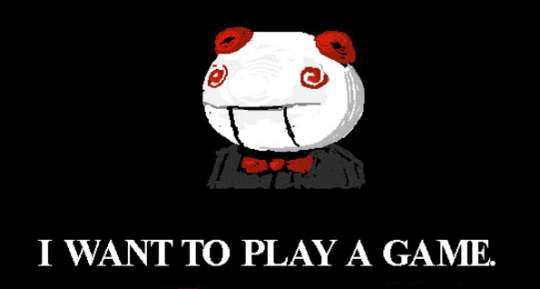
Namely, the SAW-inspired snuff film/”I want to play a Game” stuff. Bro expresses an interest in it, but Dirk really never so much as mentions it. The Jigsaw aesthetic is Caliborn’s thing exclusively, and the only real narrative explanation it has in the story is Lil Cal acting as a transmitter for the interest.
So having this in mind I think there is an extent to which Cal’s influence can be implicated in Bro’s descent. Not that it excuses any of his assholery.
Lastly, here’s a bit of rarely indulged speculation:
We do already know Grandpa raised Mom, suggesting Grandpa may have raised Bro as well. Hell, Hiveswap even has a blurry as hell picture that may be of Bro facepalming that i can’t for the life of me find right now so i guess ill just post it later who cares, the point is
if it’s true Grandpa remembers the Alphas in some way, or if it’s true *Bro* does– given that he’s a Heart player, that seems plausible too–those could also be factors that isolated Bro and made him vulnerable to Cal’s influence?
That is, of course, purely speculative. It’s just one of many potential questions I’m excited to see if Hiveswap will explore.
The kids warp over to Caliborn. He sticks the Betas in his Juju, and all indications are they’ll just pop back out later when Vriska releases them in [S] Act 7.
Gamzee gets cut in half by Dirk, and then Caliborn beats the shit out of the Alphas. Then he gets focused on Dirk because he always had kind of a weird kismesis attraction thing going on with him, ends up beating Dirk up really bad, Jake sees Dirk in danger and throws a tantrum of cosmic proportions while unlocking his Hope powers and beating the crap out of Caliborn with his gay hope bubble.
The beating gives Dirk the time to fire off the soul-destroying spell we saw Brain Ghost Dirk use on Aranea, thanks to the sudden appearance of Arquis (who emerges from Literally Nowhere–he’s part Void player, remember?) who holds Caliborn down. Caliborn’s soul is forced into Lil Cal’s, along with AR’s(a Dirk), Equius’, and half of Gamzee’s body/soul.
As the most willful player, Caliborn predominates over the other three and presumably consumes their souls–they now exist as parts of him, so they’re essentially dead. Lord English seems to be made up primarily of Caliborn with only the most passive hints of Gamzee’s soul present. Doc Scratch seems to be primarily AR, with glimmers of Equius and subservient to Lord English’s will.
Incidentally, this lines up with the player’s Class type–A Lord is the “most Active” kind of player, and Princes are also “very Active” according to Calliope. Bard are Passive, and all signs point to Heirs being passive too. Gamzee and Equius adopt the passive roles in their new existences accordingly.
Caliborn wanted to be “bros” with Dirk, and now he gets a warped version of Dirk as his eternal bro puppet forever.
Feel free to send another ask if you’re still confused about something in particular!
2. The Neverending Story – Muse/Lord & The rules of Paradox Space
[Spoilers for The Neverending Story]
I’m not the first to note Homestuck’s references to AURYN, the magical amulet from The Neverending Story. The symbol of the intertwined black and white snakes is directly referenced only twice in Homestuck’s story, and both times it tells us a mind-boggling amount about the nature and function of Homestuck’s universe.
And even that only scratches the surface. So instead of starting off with Homestuck itself, let me tell you a little bit about The Neverending Story itself.
The Neverending Story is a book split in two. In the most commonly printed version, it comes in Red and Green text halves. The real world, the realm of humans where you and I live–those sections are printed in Red. Fantastica, the world of fiction and stories and all things imaginary, is printed in green.
And as with two sections, The Neverending Story is split into two central figures:
The Childlike Empress, and Bastian Balthazar Bux.
Muse & Lord
In the green-lettered plains of Fantastica, The Childlike Empress rules over all. Although her authority is accepted by even the most evil and mostrous in Fantastica, she never gives orders. Even so, she is both eternal and eternally childlike. Good and evil are equal in her eyes.
Sometimes called the Golden-Eyed Commander of Wishes, The Childlike Empress’ authority only manifests when she grants her gem of wish-fulfilling powers–AURYN–to another. This other is treated as though the Empress herself were present, and acts as an emmisary for her.
She is the embodiment of Fantasy itself, inspiring others to act out her will. She is a question, a mystery, a wonder. She is, in short…A Muse.
And she has a direct parallel in Calliope, who similarly draws no distinction between good and evil (people forget that she read what was likely the worst of Vriska without being exposed to her growth, and seemingly wanted to be friends with her anyway)…
Everyone is entangled in and created by Lord English’s Alpha Timeline, but that web is Calliope’s as well, and she’s causally entangled in the creation of all four of the universes we follow.
And again like the Childlike Empress, Calliope who bestows her Symbol on others, granting AURYN to humans–an emblem which endows in the wearer the ability to make any wish come true.
Hell, Calliope even seems not to grow up normally in Act 7 and [S] Credits. A Childlike Empress indeed. And as for her counterpart? Bastian may not be as much of a jerk as Caliborn, but the parallels between them are even more explicit:
Where The Childlike Empress is a Muse only by implication, Bastian is textually and demonstrably a Lord.
But let’s back up a bit.
Bastian Balthazar Bux is a little boy who steals a book named “The Neverending Story” from a bookshop and hides in his school to read it in one sitting. His sections, those taking place in the Human world, typically feature text colored Red.
However, around the halfway point of The Neverending Story, he realizes that the story is not only aware of him, but calling out to him. And he eventually finds himself pulled into the realm of Fantastica.
Bastian is a human, you see, and only humans can create stories–the inhabitants of Fantastica themselves cannot. And once the Childlike Empress is reborn with a new name, Fantastica must be reborn as well. So The Childlike Empress meets Bastian in the void between the two realms of Fantastica, and gives him the amulet AURYN, the symbol of her power.
And so, she entrusts him with a quest: To fulfill his wishes in Fantastica, and re-create the realm of Fantasy as he goes.
Incidentally, receiving AURYN also changes Bastian’s race. Bastian is explicitly white, but upon arriving in Fantastica transforms into “a young prince from the Orient”. I’m not sure why that even happens, to be honest? Let’s note that this book is from, like, 1979 and definitely not perfect.
To be honest, I should’ve noted that was explicit earlier, since Homestuck all but explicitly states that Tricksterfied Cherubs would look like Lil Cal, which definitely entails a primary skin color swap. And there, as with Humans, the transformation always renders the subject Caucasian-looking.
Now, where were we?
Ah, right. So, the first thing you might notice is that Bastian’s ascent to Lordship also coincides with him leaving the World of Men and entering the World of Fantasy/Ideas.
Which strikes his first echo with Caliborn. Both characters’ entries into power are marked by changing their text color to Green–the color of their respective Muse figures. And like Calliope dies for Caliborn to Enter, The Childlike Empress disappears from Fantastica as soon as Bastian becomes it’s Lord.
Bastian spends most of his adventure in the realm seeking to meet her once more, on some level–just as Lord English spends an eternity in the Void, trying to find and destroy the Calliopes.
And during his search, Bastian also accrues subjects and followers who carry out his will. Bastian is adored for his ability to create stories–which instantly become Real– across Fantastica. With The Childlike Empress’ AURYN around his neck, nothing can resist his will. Bastian becomes, for all intents and purposes, a God.
Although he loses his humanity little by little with every wish he makes. The memory of being weak, the memory of being ugly, the memory of being scared– as Bastian travels, he grows more self-satisfied and arrogant, desiring the adoration of others without true regard for their feelings and hearts.
Until in the end, he’s exploiting those he calls friends through sheer force of will. At this point, Bastian seeks to replace The Childlike Empress entirely, attempting to become the Childlike Emperor–just as Lord English seeks to emulate Calliope through a multitude of stylistic choices in his personal aesthetic.
“Doc Scratch was born to serve as Lord English’s other half, replacing the role Calliope served when the two shared one body. From Caliborn’s warped perspective, the two share many similarities. They’re both wordy, intelligent, and (as Caliborn saw her) quite smug. He scrapbooks with a ~ATH book like she did, and carries her weapon.
In addition to being a pastiche of his sister, Scratch is also a symbol of his other weakness, the cue ball. Both are heralded to be the key to his defeat, after all. He does double duty then by killing Scratch, hatching out of his body and growing more powerful (by assimilating Scratch’s first guardian powers), “predominating” over him and asserting his dominance over both his vulnerabilities once again.”
And Bastian, well…
Sound familiar at all?
By the end, Bastian is at risk of becoming what is essentially a Yaldabaoth–an arrogant God with full dominion over his material reality, but blind to the world of ideas outside of him.
Luckily, Bastian escapes this fate, and goes on to live a happy life, becoming a world-renowed storyteller. His path is not the path of the Lord forever. But that is another story, and shall be told another time.
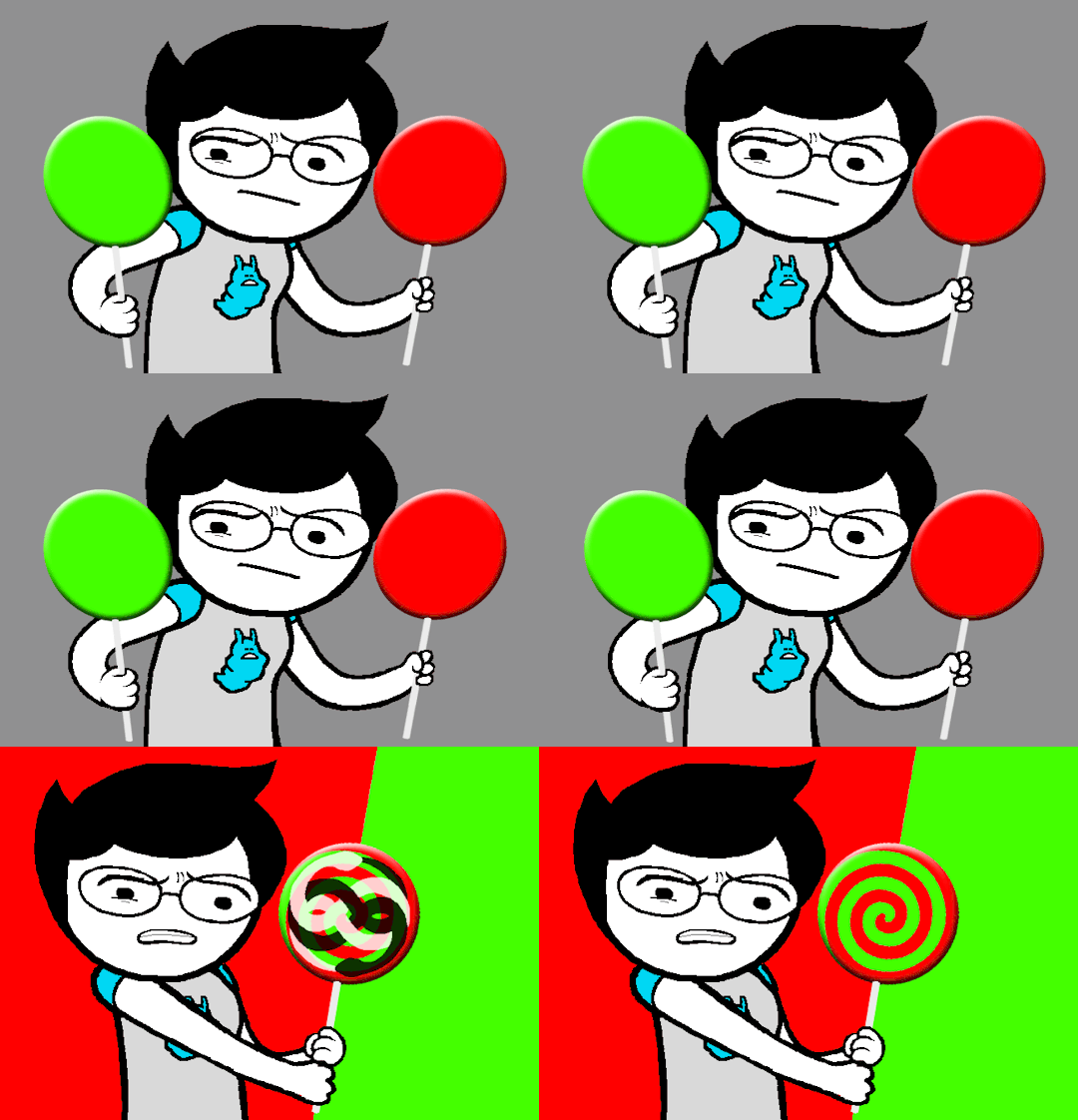
There’s one last thing to note about AURYN, because it appears in two places in Homestuck. There’s the Lollipop, yes–and by linking AURYN to the Cherubs, we learn a great deal about both Muse and Lord, Calliope and Caliborn.
But AURYN’s impact is a bit more far-reaching than just them.
The emblem is also depicted during the mating ritual of Cherubs, remember? And it’s important to view this image in context, because as Aranea tells us…
Mating Cherubs tap into the forces of power presiding over all that is eternal. Cherubs are linked to the primordial forces of reality by their nature. The source of Cherub’s powers is their intrinsic connection to the flow and nature of reality.
Which suggests that the principle that AURYN is inscribed with, the principle that guides the power of its magic, is also the fundamental principle of Homestuck’s universe. Cherubs are simply beings with a unique ability to tap directly into it. And that principle is…
“Do As You Will.”
Nothing in Homestuck’s reality happens except by the Will of someone living inside it. Individual will is the backbone of all events and objects, all circumstances and beings, all people and universes in Homestuck. In Homestuck, everybody always gets what they want–one way or another.
That is what AURYN– placed here, at the center of the forces of creation and destruction– suggests. A good example of this is Lord English’s creation, where Caliborn and Gamzee’s wills to become Lord English meet Arquis’ desire to have a heroic moment of unfathomable impact onto reality:
Thus resulting in a scenario that fulfills all of their desires, and results in the creation of Lord English and Doc Scratch:
I’m not going to list a bunch of other examples because this kind of stuff is literally always what happens in Homestuck. The only thing that trumps a person’s desires in Homestuck is the desires of another willing to undermine or exploit the former.
And that kind of authoritarian behavior is the closest thing to “Sin” Homestuck’s setting has. It always comes with consequences. This is also why Karma exists in Homestuck’s causality, as noted by Latula. This is what the cycle of revenge was about.
Not even killing someone can truly erase the impact of their will on reality in Homestuck’s universe, and usurping or denying others their wills always comes with a whiplash effect back on yourself. So what does that mean for Lord English, who has so thoroughly usurped and denied the wills of every other member of the cast?
Well that… is another story, and shall be told another time.
Next time, we’ll talk about the Mother franchise’s two later installments: Mother 3, and Earthbound. There’s much to discuss. Perhaps we’ll even find an echo of Lord English’s karmic punishment there?
@revolutionaryduelist please give feedback on this, I believe you can make more sense to this than I ever could hope to.
The oddity of how Lil’ Hal became lil’ Cal has confused me, because I probably missed something.
But honestly I’ve come to this best solution so far. Cal island short for Caliborn, and seeing how Caliborn interacted more so with Dirk can only, this might of had an effect on his adult Beta self. Seeing as Caliborn had made his way to… the computer, accompanied by Gamzee, Liv, and lil’ Hal/Cal, Who knows what could’ve entirely happened. Other than Gamzee being shot multiple times. Besides, I digress. My point May be choppy, ill-supported and as well as short lived, I believe Caliborn had an effect to the point that Dirk/Bro from our starter timeline, the Beta timeline, had renamed the puppet after him in a way.
I’m not sure what you’re referring to, to be honest. Hal doesn’t exactly “become” Lil Cal–Arquius, Caliborn and Gamzee are all fused into Lil Cal and become parts of Lord English/Doc Scratch. This is what the Masterpiece is about.
As for Lil Cal originally being named for Cal, yeah I think that’s likely. Don’t know that Bro had to name him anything, though. Cal is printed right on the doll’s name, after all.
Feel free to reply with the nature of your question in case I’m missing something.
I’m glad you liked it! As for the Alphas’ cruxite item–the Caliborn piñata– I do think there’s some interesting subtext to it, but I also feel it’s pretty obvious, so I’m not sure I’ll be adding much that people don’t already know.
I feel like there’ll be more explicit stuff to say after the Epilogue, but basically, the cruxite artifacts seem to imply something of the impact on reality each character has. Jade gets Bec’s pinata, and choosing to kill Bec pretty much grants her absurd levels of power.
Dave’s impact comes by accepting the direction of others and playing ball with their suggestions as well as with the passage of Time. Rose’s destruction of the bottle symbolizes how she smashes her Sburb session in search of truth.
The Alphas don’t get distinct items, but only the one they all take on together–the Caliborn pinata. And so, they are relatively fruitless and unimpactful for most of the narrative.
Their biggest contribution to the story is unarguably killing Caliborn and turning him into Lord English, and so serving as the “Alpha” to his existence as a Yaldabaoth.
That’s foreshadowed as early as their entry. I think there’s more to say there, but I don’t like to speculate, so I’ll just say I won’t be surprised if we see that event again whenever the epilogue happens.
Part #1: Flight of the Movie & Anime References
This section is pretty much setup for the next three essays. There’s a couple sections here that I have a fair bit to say about, but probably just as many where I’ll close out with some minor observations, or reference to someone else’s Good Post™.
What I think is important is noting the consistency and similarity with which Homestuck engages in meaningful reference. I just want you to have this list in mind as I flesh out the three truly impactful references I want to talk about in this series.
So here’s a short list of cases where Homestuck outright leans on other stories to structure itself, with accompanying references:
1) The Game Over Arc – Plot Structure & Dragon Ball Z
We’re starting with Dragon Ball Z because the references here are relatively simple and straightforward, and they largely set up either pretty clear structural parallels, rather than thematic ones.
The clearest of these examples is the section of the story that begins with the joke Arquius makes above. In case you don’t know, the “over 9000″ meme has its roots in this iconic, hilarious sequence from DBZ:
What’s notable is what follows. From the moment this joke happens, the very structure of Homestuck changes to following the loose structure of some of the most memorable DBZ arcs.
I’m no buff on the series, but the memories it calls up for me most strongly resemble the Namek/Freeza or Buu arcs, and expert DBZ consultant @alotofmomos (who hates me for writing this) confirms these are the arcs that most perform the particular structure Homestuck will now be mimicking.
And what does that structure consist of? A particular mix of “pacing” choices, cinematography, and sheer scale of spectacle that I find hard to source to anything but DBZ. I can’t even think of other Shonen series that mix all these elements in quite the same way, though again, I’m no expert.
Some of these elements are:
A) Drawn out, massive power-up sequences:
B) Conflicts that carry out on planetary scales, and indeed often destroy the planets hosting them.
This pretty much speaks for itself, doesn’t it? Do I really have to say some stuff to make it look like I’m doing anything other than pointing out some obvious goddamn parallels that blew my mind because they took me years to notice?
Alright, fine. I’ll say this much: I think it’s quite fitting that Homestuck would borrow from the DBZ playbook for the section of the story that illustrates the sheer mind-boggling scale of power our protagonists have reached.
There’s very few stories out there that demonstrate this sense of mortals achieving such bonkers dominion over reality through sheer force of will, and the homage certainly hammers home the idea that these kids are Gods with levels of power we’ve barely scratched the surface of.
But I don’t think there’s a big Narrative Payoff to this particular reference. Instead, I think what Homestuck takes from this is functional in terms of narrative. Because the most interesting things this narrative model adopts are structural.
C) Convenient plot-structure.
Namely, what we end up with is a bunch of characters grouped into disparate conflicts across the same larger “playing field”, separated by considerable amounts of distance–and thus, isolating them into distinct narratives.
As a natural consequence of this, the pacing slows down to an excruciatingly slowness, as we cut from conflict to conflict, each one progressing in small snippets of minutes or even seconds at a time. All of this is par for the course for Dragon Ball Z, particularly in the Namek saga.
So what this provides us with isn’t a profound, revelatory moment of thematic meaning–but instead, an effective backdrop on which to flesh out that meaning elsewhere. In fact, this very arc does that like twice with two other stories!
So let’s move on from this and take a look at a couple of character arcs whose resolutions are telegraphed by way of reference.
The bottom line is: Terezi janks Jade’s shoes, and adopts the role of Dorothy in Homestuck’s symbol logic. This leads her home–to Vriska and their memories of growing up together, and ultimately to embracing her red feelings for her.
Terezi’s resolution is one of two relationships resolved in the wake of [S] Game Over. Let’s take a look at the other.
3) Jake as Buttercup
Don’t have much to say about this one either, cause I already wrote most of it. I will say I don’t think it’s an accident that the arcs to coincide here are Dirkjake’s and Vrisrezi’s, since the two relationships are in many ways direct parallels. But that’s another essay for another time.
I have received some rightful criticism on my writing on Jake in particular, and this is a good place to clarify my position, however. I do not think it’s particularly “Good” or “Healthy” for Jake to indulge his own desires at the expense of Dirk’s (or Jane’s) feelings.
My point has never been that Jake’s selfish behavior is inherently good–merely that Jake’s reasons for being in love with Dirk are his own, and not imposed to him from Dirk himself, or anyone around him.
As with all things in Homestuck, the key is for Jake to grapple with the negatives in himself and come to balance with the tension between his own wants and his relationships with others. This is true of literally everyone in Homestuck.
And there’s an easier way of saying what I am getting at. Because Homestuck literally gives us a guidebook to understanding Jake and Dirk’s relationships to each other, as parsed in Jake’s head–a guidebook that provides context to their entire relationship.
Just as you can read Terezi as Dorothy, so too can you read Jake as Buttercup. This is the crucial distinction I seek to make. In common readings of Dirk and Jake’s relationship, Jake acquiesces to Dirk’s pushy forcing of the relationship despite Dirk’s control issues.
In this one, Dirk is a flawed but committed provider and protector, and Jake picks up on and begins internalize a belief that Dirk will always be there for him, prompting him to fall for him. This reflects the fundamental core of their attraction to each other. It does not present a solution to their communication issues. They both have to work through that and be more aware of each other’s needs.
Now, The Princess Bride is a comedy action-adventure movie, but it’s also a philosophical fairy tale. Buttercup and Westley aren’t just in love, they’re in True Love, and the driving force of the movie is how Westley’s love empowers him to do anything it takes for his beloved.
A big part of her journey is learning to truly commit to not just Westley’s love for her, but her belief in that love as something both true and powerful. Something that can transcend all odds and obstacles.
Which is. You know. Exactly what Jake does when he’s fully immersed in the power of his own faith.
Now let’s move on, and note two more movie references that the comic makes outside of the context of this DBZ-mini arc.
4) Tavros as Peter Pan
There’s not a terrible amount of depth to be drawn here, either. I think most people accept that Tavros is deliberately invoking Peter Pan in his narrative victory here, with the ghosts as his Lost Boys. I will add, however, that if Peter Pan is the role Tavros is emulating in reaching his full potential, well…
Peter Pan isn’t exactly known for being Selfless, is he? He’s a hero, for sure, but self-centeredness is pretty much his calling card as a hero. To the point that Wikipedia claims that
“In the play and book, Peter symbolizes the selfishness of childhood, and is portrayed as being forgetful and self-centered.”
Understanding Caliborn as a Yaldabaoth is one way to contextualize his power over the reality all the characters preside over, and we’ll definitely touch on that further in the next three sections I’ll be covering.
But one easy way to contextualize Lord English’s power is as…well…Jigsaw.
Like Jigsaw, Lord English builds a massive, highly controlled gauntlet that he exploits and terrorizes his victims through. The only difference is that Lord English’s dungeon is bigger than some creepy gray cellar.
It is in fact, Literally Everything that occurs within the context of the Alpha Timeline. Every homeworld that every character originates from–except for, arguably, Beforus, which is still under his sway enough to be doomed, but also presented as borderline Eden-like by comparison to Alternia.
While Yaldabaoth’s control seems very distant and abstract, Jigsaw’s is crystal clear and vicious. Everything the characters of SAW suffer is, ultimately, in the hands of the orchestrator of their misery. Their puppetmaster, so to speak.
In the same sense, pretty much every single way the characters in Homestuck suffer has Lord English at the root of it–even the thing they do to themselves and each other as a result of cultural memes.
Troll Violence, heteronormativity, quadrant normativity, and hypermasculinity–all are memetic structures that exist because Lord English himself disseminated them, in the context of Homestuck. They’re thought-traps rather than literal physical torture devices, but they’re torture tools all the same.
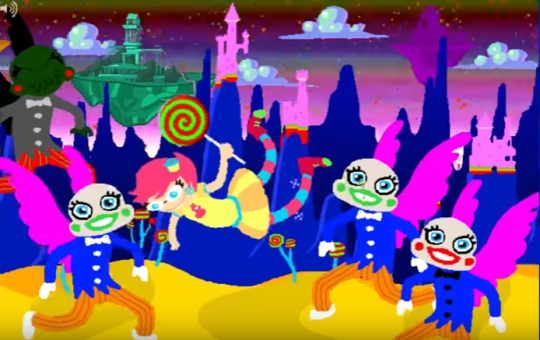
And you can even see Jigsaw as a symbol for Lord English’s influence, since it is, after all, one of the primary differences setting apart Bro and Dirk. Dirk has no interest in the SAW franchise at all, whereas Bro makes a point of mocking Dave with it. (thanks to @jadedresearcher for pointing this out, by the way!)
So yeah. Not only does SAW tell us a lot about the nature of Caliborn’s effect on our characters through the Alpha Timeline, it also acts as a mark for his influence. That’s…pretty much all there is to say on the matter.
For now.
That wraps up this little introductory round-up. Now I can get to talking about three of the biggest influences on Homestuck as a story: The Neverending Story (the book), Earthbound & Mother 3, and Gnostic Myth. Hope you’ll follow along with us over the next couple of weeks to find out more.
1) I think Lords and Muses are “real” classes insofar as any of the classes are “real”, which is to say: created by the players, as opposed to by the game.
Now all I can think about is Dirk and Jake finding ways to troll Caliborn together.
Like, Dirk is working on a robot or something by the bed and Jake is like “DIRK I HAD THE BEST IDEA. come over and rub my tummy let’s send Caliborn some lewd pornographies”
Dirk is like
“.
.
.
Ok.”
They put Caliborn’s resulting disgusted, shrill man-baby scream protests up on Youtube and it gets like 7 billion hits.








 Flying through Storytelling