


LIVE-ACTION ROLEPLAY and
the IMPACT OF ANCESTORS
Pt. 1 – Vriska the Sylph & Tavros the Rogue
I’ve written about Homestuck’s Roleplay mechanic before, so you can read these links if you want some background. Roleplay is based on Jung’s idea of Archetypes, and Homestuck is a deeply Jungian work, so I think there’s a strong basis for considering the story in these terms.
The basic idea behind Roleplay is this: Whatever a character’s Class, if they strongly admire or want to emulate a figure with a different Class, they’ll adopt said Class’ symbolic imagery and key verb behavior. This will pretty much always go poorly, since the player in question is focused on being someone else instead of being themselves.
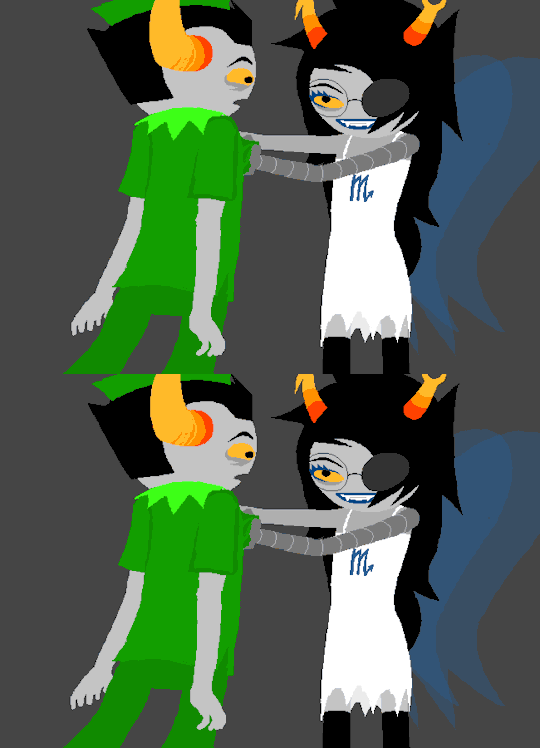

Vriska is like, kind of the ur example of this behavior, just because it’s so central to her character. I’ve talked about how she tries extremely hard to act like Aranea/Mindfang, by acting out the part of a Fairy.


Not much to add there, except to note that her Fairy God Troll behavior towards John (behavior that only Kanaya, a Sylph, shares while also succeeding in what she accomplishes) also leads to her Making/Creating Bec Noir.
But let’s talk about someone who isn’t very interested in Roleplay at all:
Tavros Nitram.
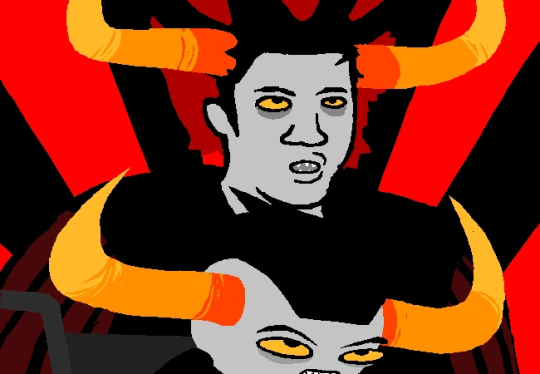

Vriska tells us that the common bloods are less likely to value historical legends and Alternian traditions, and that actually seems to reflect in the story mechanically.
Eridan, Gamzee, Equius, Vriska, Terezi–all of these characters roleplay very heavily, and sit relatively high on the spectrum while sharing a passion for FLARP and/or historical systems of power, like the Hemospectrum or the Subjugglators.
Aradia, Karkat, Sollux, Tavros–all of these characters don’t really have much of an interest in their Ancestral Legacies. Tavros comes the closest, but it’s important to remember that his Rufioh is not the Summoner! He’s just a guy Tavros made up in his head or got from the Pupa Pan movie, not Rufioh himself.
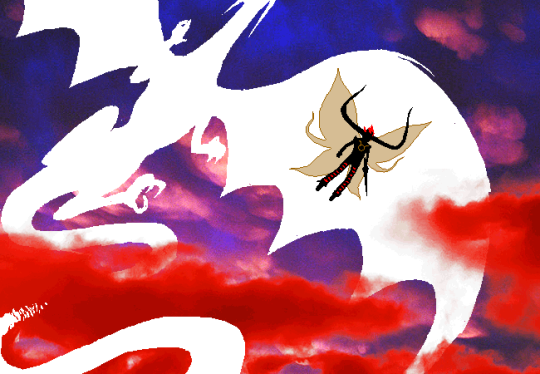

Vriska’s the one who read Mindfang’s Journal, and so she’s the one who relates Tavros to the Summoner, who is a Rogue of Breath. And when she tries to make Tavros stronger, what she wants is to make him more like him.
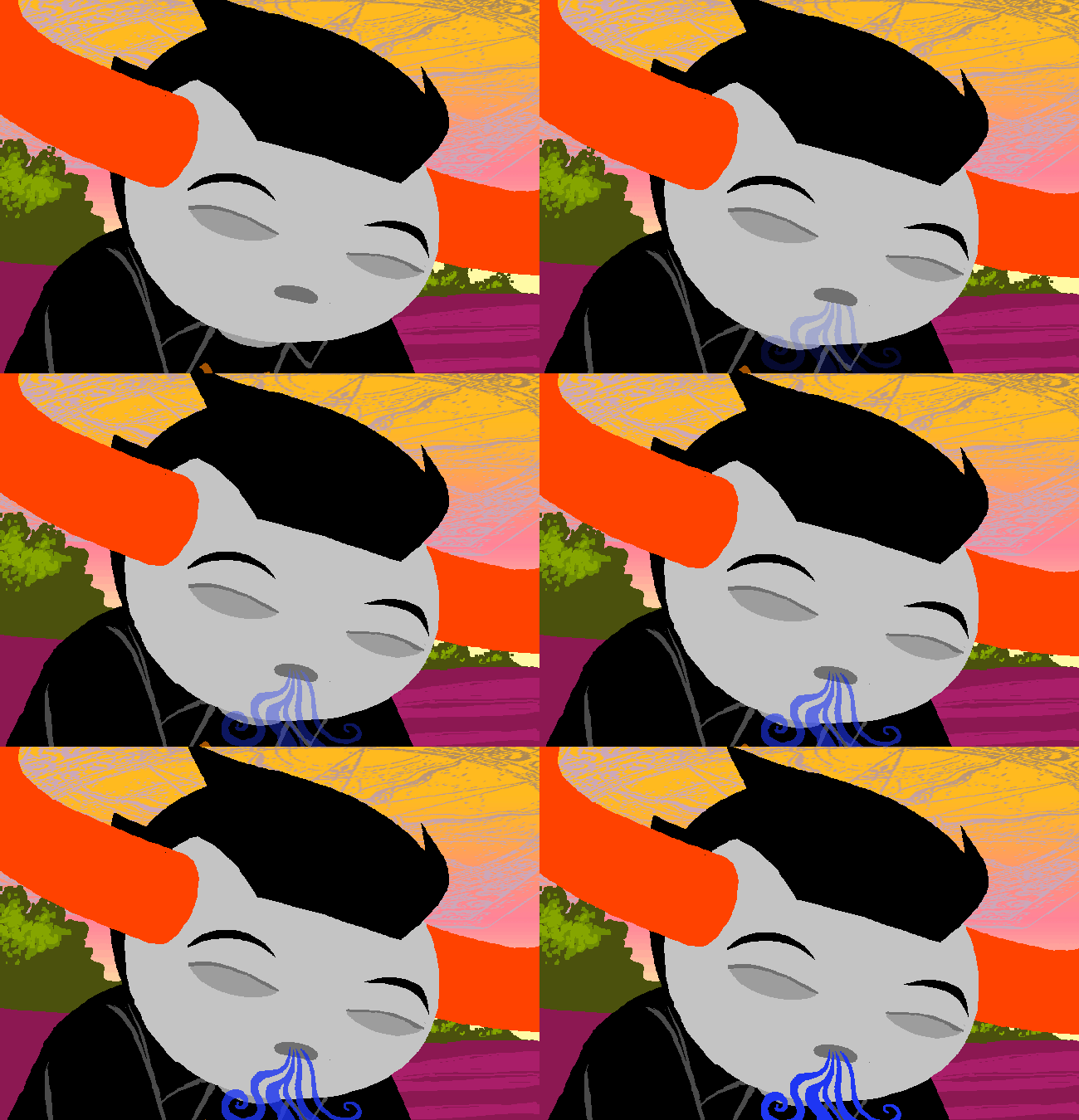
Let’s take this to the critical point of Vriska’s investment in Tavros, and focus on Tavros for once. One thing people don’t tend to notice is that his Aspect powers nearly came to light as he prepared to kiss Vriska–or, in other words, to give her Breath. This was something he made a conscious choice to do, which I view as a critical part of his arc as a Page–the Active Serve/Give class.
If he’d succeeded, he’d presumably have learned how to control his powers better, and become a more effective member of the team by taking direct control of his power.
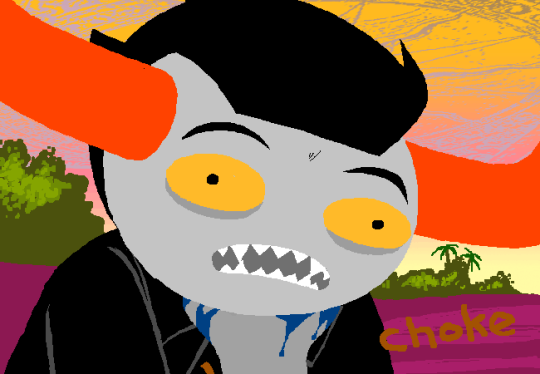
He does not succeed, as Vriska wants him to do things her way instead.
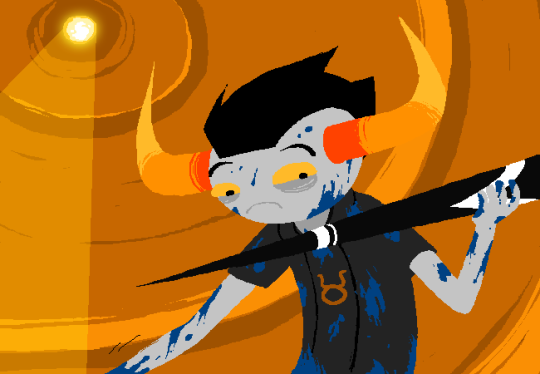

And her way, of course, is to attempt to have Tavros kill her to spare her an agonizing death. Put another way, Vriska wants Tavros to steal her life, for her benefit. This is behavior that would come naturally to a Rogue of Breath,
but it does not come naturally to Tavros.
Notice that Tavros grows increasingly covered in Blood during this section, by the way.His freedom and personal momentum are utterly crushed under the weight of his relationship with Vriska, and the responsibility she thrusts on him.
Calliope tells us that if a character is “corrupted by an outside influence”, their abilities may manifest in ways “in defiance of their Aspect”. Funnily enough, through roleplay, we can in fact reach scenarios similar to those of Inversion Theory, since it is true that players who are roleplaying intensely sometimes take on connotations of their dichotomous Aspect.

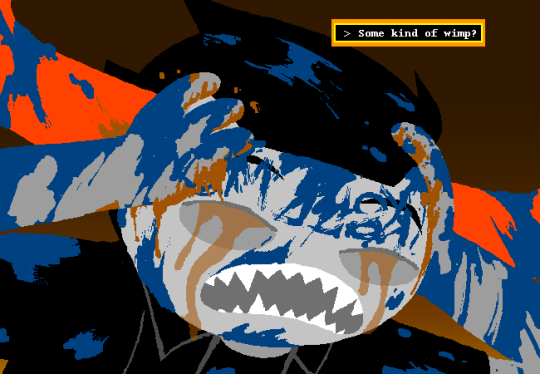
This is a perfect example, since a Page and a Rogue are in fact entirely opposites in verbs and active/passive affinity. Tavros does not like behaving Passively, and does not find himself comfortable killing for Vriska’s benefit, or for that matter being told what to do.
And both of them suffer heavily for it as a result. Vriska dies a slow and painful death, and Tavros finds the whole event so traumatizing and exhausting that he basically withdraws completely for the rest of the session. That’s the kind of intensely negative effect that forcing roles on others can have in Homestuck.
So what happens when characters willingly take on roles that aren’t natural to them? And how much can this system be said to apply to most characters in the story?
Let’s try to answer both questions next time, when we explore the roleplay behaviors surrounding Eridan, Gamzee, and Kanaya during the height of Horrorstuck, and how Active/Passive alignment is communicated to the audience through visual symbolism.
Til then, keep rising.




 Flying through Storytelling