homestuckexamination:

Role of the Creator – The Sylph


Those born
with the Role of the Sylph are meddlesome by nature. They enjoy
being aware of what’s going on with those around them, and can come off as
bothersome when they start prying where they shouldn’t. With rich internal
lives, they are passionate about their interests and will gladly share and
overshare with those they trust, yet may appear to alienate themselves from the
rest. An open book for the ones they love, an inscrutable riddle to the rest of
the world. Sylphs tend to act for the benefit of what they think is important,
be it other people, their beliefs or convictions, even when their help may not
be wanted, even if their means are questionable. At their best, they are
patient and gentle, bringers of unity and care to their circles. At their
worst, they can be Machiavellian, invasive and petty.

Sylphs are heavily tied to their Aspect, even more so than other
Classes. For them, their Aspect make up an integral part of their lives, and
shape them to a great degree. Whether it be Knowledge, Friendship, Faith,
Survival, a Sylph’s affinity may range from the Characteristic, to the
borderline Obsessive. They’re most comfortable when allowed to engage in their
interests, and given enough relevance and importance, they may become one of
the most powerful forces you could hope to have on your side. A restrained
Sylph will, however, often find themselves held back from becoming relevant,
fading into obscurity as they wait for their time to shine, and perhaps,
eventually breaking through what binds them to assert themselves where they
rightfully belong.

Being one of the Creator Classes, Sylphs are the Passive counterpart to Maids,
and similar to them, their strengths lie in Making things.
Creating, Increasing, Expanding or otherwise Improving their Aspect, or through
their Aspect, their power sets are strongly suited towards Healing, Repairing,
Empowering and Enabling their group to continue fighting. Don’t let that make
you think they are only suited for the back lines, however, if made to take
direct action, a Sylph channelling their Aspect is a force to be reckoned with.
They will fight for their cause and for those they love, they will keep going
until victory is achieved, or until they drop dead.

ink-and-homestuck:

revolutionaryduelist:

landofsomethingsomething:

the strilondes would all die for each other and anyone who devalues their relationships on any axis between them is my sworn fandom enemy. also, all their SOs know and support this. they are All Family and they all love and value each other deeply. 

the striders know the lalondes are dramatic highkey performative disasters but also that they are brilliant, kind, caring, dependable and willing to throw the fuck down when it’s time to do so. 

similarly the lalondes know that the striders are desperately insecure clingy bullshit bandits who deny everything but also that they too are brilliant, kind, caring, dependable and absolutely also willing to throw the fuck down when it matters most.

dave and roxy know that dirk and rose are desperate to appear Intellectual and Above Everything and are content to mostly let them have that with the occasional ribbing as long as they know that if they ever need help they always have support here waiting

and dirk and rose know that dave and roxy are Exuberantly Irreverent of everything to hide the fact that they care about everything way too fucking much and are mostly content to let them cavort around idiotically because it makes them happy as long as they understand that people do in fact generally care and love them, the real them, the parts of them that are broken and tangled and messy, the Reatalk under all that quality Shitpost

and also all these dynamics can be applied almost 1:1 in reverse because that’s how they fucking roll

the strilonde family is ride or die to the end and I love them so much anyway thanks for reading

This is also true about the Prospit clan, and about the way Prospits and Dersites generally feel about each other. It’s pretty amusing when people dunk on Jake while also talking up how much they love Jade, because being mean to Jake is maybe the fastest way I can think of to get Jade pissed at you???

The same is true about like, Dave and Jake, or Dirk and John. Dirk loves Jake and Jane so much he’d p much lose it constantly being aware that John and Jade are their kids, John talking to Dave and Dirk would lead to him understanding Dave’s childhood a LOT better, like.

Idk I could do this forever, the eight human kids are a mobius knot of interwoven friendship, acceptance and mutual love and it’s the best thing tbh.

I always said that these kids love each other and genuinely care about each other.

I also imagine Dirk and Jade talking about growing up alone in the middle of the ocean, and resolving their issues about being in human society.

John and Jake would arrange movie nights and watch so terrible movies, that sometimes even John would say he is done. John would help Jake with his self-confidence issues.

Gosh, I love homestuck.

mmmmmmmmmm yessss good moisturize me more, dirk and jade talking and being friends is my actual lifeblood

homestuckexamination:

Role of the Creator – The Maid


Those born
with the Role of the Maid tend to differ from their peers.
Generally alienated from the norm in some way or other, they struggle with what
fate has in store for them, and fight to liberate themselves in order to be
happy. The world seems to want them to give more than they are willing to with
little payback, wearing them out, and only by gaining control of their
situation and asserting what they want can they fully express themselves. While
held back, Maids tend to bottle up their true desires and emotions, they may
become complacent, even resigned about their situation, but once things reach a
breaking point, or hopefully, once given a chance to break free, they will let
their true demeanor out and seek what they think is best for themselves. They
can show a passionate love for they things they deem important, while holding a
similarly passionate contempt and dislike for the things that wronged them and
those they care about. At their best, they are capable, understanding,
encouraging and content. At their worst, they can be irascible, remorseful and
become alienated from the rest of their circle.

Maids share a very close relationship with their Aspect, which can
be often times as beneficial as it can be damaging. The struggle they need to
face and overcome is often related to their Aspect, but that doesn’t mean they
can only become happy if they reject it entirely. In fact, completely
disregarding their Aspect can be just as toxic for them as being shackled by
it. Freeing themselves to adopt facets selectively, or making what forcefully
bound them theirs instead, turning the tables on their situation, but never
casting their Aspect completely away, a fully realized Maid needs to know how
to strike a balance. Once this balance is found, they can become an extremely
effective and confident power to be relied on. Ignoring or dismissing a Maid’s
struggle and desires, however, can easily turn them against you, and they won’t
be afraid to hold it against you if things get bad enough.

Being one of the Creator Classes, Maids are the Active counterpart to Sylphs,
and similar to them, their strengths lie in Making things. The
power of Creation, Improvement, Growth, flows through them, allowing them to
amplify their impact in combat or empower themselves with their Aspect. Not
only that, but, while more prone to taking direct action, Maids can just as
easily use their powers to similarly Aid and Enable those they’re fighting
alongside with, allowing them to be reliable in any situation. They fight for
what they want, and they are going to take it.

Having the aspects of the beta trolls’ signs as a (conscience or not) harmful cultural ideal for each caste feels weird to me. Despite their society being used to facilitate their role in LE’s will, I wouldn’t think that the players against his tyranny would BE that ideal. It just feels weird you know? Why would these characters being who they are, be what a post-doc scratch society values? I think that may be what bothers ppl most if they don’t think that one theory has substantial subtext. 1/2

It actually seems odd to me personally because in some cases the beta trolls we’re led to try and surpress who they really were and what they really wanted because of cultural expectations. (though you could say this has more to do with class roleplay than aspects in the case of just about everyone but karkat I think? Kinda?) also the trolls seemed made out (or stated) to be exceptions among their castes, some people think that’s important and relevant (I could stand to debate that) 2/2

I’m not sure what to say about the trolls being a cultural ideal thing. This is, again, not really about adulating the trolls themselves. The only thing that seems to claim a hold over the Castes is the sign’s Aspect. And I’m not particularly sure it’s about what society values on a cultural level. In a lot of ways, this stuff seems to show up as a kind of stereotyping. Xefros says indigos break cutlery, as if its something expected of the caste. There’s all sorts of statements about how society stereotypically views Rustbloods. So on.

That said, you hit the nail on the head. The Sburb trolls are all still immensely confused and acting against form–it’s just that almost all of them are doing so based on Class confusion, attempting to roleplay other classes without realizing what they’re doing and whatnot. 

This presumed Aspect confusion, if correct, would be an additional layer of difficulty, that the Homestuck trolls were largely spared but everyone else on Alternia has to deal with to varying degrees. It would also be an evolution of the Classpect system, as far as our understanding of it goes.

I’m not sure what it means for the trolls to be exceptions among their castes, but if they’re uniquely powerful, that might have to do with them being handed a relative lucky break by not having their blood Caste steer them away from their natural Aspect alignment. If troll powers per Caste are linked to Aspect, but most members have different Aspect affinities, then suddenly it makes sense to some extent that one rustblood would have weaker psychic powers than another, and so on.

That said, maybe the most important thing to get across here is that I’m not even particularly sure about this whole setup existing! Even if people do agree with me, I would really rather not come off like this is all DEFINITELY, FOR SURE, SUPER IN THE TEXT and have people get super married to the idea. I think it’s interesting and fun and want to foster excitement for Hiveswap where I can, but my approach to this stuff is always pretty tentative. 

image

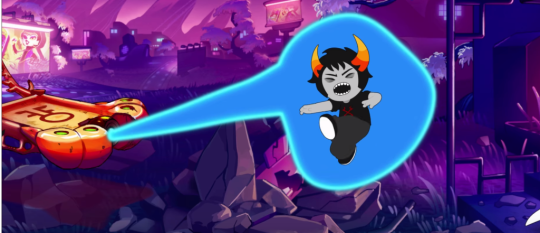
Xefros is a Rage player, yet thinks a lot about Time. Dammek is a Blood player, yet the main thing he steals from Xefros is a Hoverpad–an object of detachment, freedom, and literal Flight, who’s projected beam is literally Breath Blue. All this in the same game where Joey is being strongly linked to both Light and Life, simultaneously. Why are these double Aspect tendencies happening? Is there a logic to them, or are we just reading too much into it? And if there is a logic to them, what might it be?

 At this point, the amount of confidence I invest in WP’s writing is such that I default to assuming that if I’m wrong, it’s because something better and more interesting is going on. So if I sound more willing to speculate than I used to be, it’s because I’m entirely comfortable with turning out to be incorrect about x or y thing. Wak’s theory is currently the best guess I’ve picked up on, so I’m running with it. But it could likely be wrong.

It’s even possible we ARE reading too much into the text, and WP just doesn’t want us thinking about Classpects in Act 1! Learning even that much would be useful in helping us figure out how to approach WP’s stories in the future. But Homestuck always lent itself to in-depth reading, and for now doing the same with Hiveswap feels meaningful and interesting. More importantly than that, it’s fun. So I think it’s worth doing.

But I don’t want my attempts to come to this venture with an air of fun and confidence to come off as me being certain, or proclaiming an Absolute Truth about the narrative. 
I’m raising questions here, not delivering answers. 

A thought occurs regarding Xefros’s Rage alignment. Could it be possible that Dammek’s behavior(general paranoia and a desire for destruction of authority/anarchy) is a result of Xefros’s Page of Rage status? Could it be that his desire to protect Xefros is so powerful, and that he is so saturated in Rage, that it has made him unstable and destructive?

magpiebridge:

Gotta trim this down a bit, and I’m not going to address every point,
because we seem to have a fundamentally different view of some of the
characters in a way extended discourse never seems to resolve, but…

Re:
Passive Page and ghost!Tavros’s last stand –  I don’t read his final
plot arc as being in any way, shape, or form for Vriska’s benefit.  I
think he did what he could to empower the ghosts he met with Breath, en
masse, in the form of agency and the freedom/opportunity to break the
holding pattern of EITHER ‘sit in a bubble and continue to do exactly the same
thing we’ve been doing all along as we slowly become caricatures of ourselves’, OR ‘be mind-controlled into doing this thing that’s going to get us all double-killed’.  He offered a wildcard option.  I also think it was inherently kind of a grand yet frivolous action, whether he knew it at the time or not–no number of ghosts was going to do anything to actually stop or defeat the unstoppable Lord English, any more than Vriska was, but boy would they have fun and make new friends in the attempt! (The Breath theme)  I agree that it was a final, fantastic ‘screw you’ to everything Vriska stood for to do the thing she obsessed about and tried and failed to do, because her own class is inherently self-oriented and she at least is really really bad at doing things that benefit others in an effective way, and then casually hand it off “control” to someone else in one more demonstration of how much it truly didn’t matter, because it was all just playing around.  It just wasn’t an act that was designed to directly benefit Tavros or motivate anyone to protect him in any way, whatever the side-effects.

Re: Dave, and basically everyone on the post-retcon meteor –  I don’t think a single one of them really got lasting resolution or felt happier or more empowered in any way.  Dave got one conversation, that talk with Dirk… that was a start, I guess.  But Vriska’s entire gameplan was designed (once again, shockingly) to deny everyone of importance and meaning by ‘stealing’ it for herself.  Karkat was reduced to meaningless frustration and apathy in virtual isolation except for Dave, Dave gave up doing anything at all with time travel and retreated into imagination games to avoid responsibility or conflict, Terezi was an anxious wreck of herself with no confidence left in her own abilities or decisions, Rose gave up finding any meaning in what she perceived, Kanaya didn’t even seem to find it worthwhile to push back amidst Vriska’s interference, and Gamzee was literally chained up and locked in an airless box with corpses until he could be tossed where the alpha timeline required him to be in order to complete Lord English’s causal loop.  None of that was justified or beneficial to those characters, short or long-term.

I also don’t really think class roleplaying is necessary to explain Dave’s Knight of Time behavior–he started out by obsessively trying to protect everyone he cared about all the time constantly with his Time abilities, usually at the expense of himself.  Dead Daves everywhere.  As an Active, not Passive player… his strengths were not really in that area.  Of course he wasn’t happy or motivated, and of course it left him further traumatized.  If he’d focused on himself and his own needs more, and becoming the best iteration of himself that he could be, it’s possible that he would have been able to take a much more effective role, fulfill the prophecy about himself, and be satisfied and self-confident as an Active Time player–but it would have been a completely different story, because Lord English wouldn’t have been able to complete his loop, so it’s sort of a moot point, and that’s jumping tracks from Watsonian to Doylist, anyway.

Trimmin was a good idea, thanks. As far as stuff where our differences in views are probably irreconciable, I’ll just say that I completely stand at odds with this:

revolutionaryduelist:

Maybe to some extent. I do think Dammek is in an unhealthy state of mind, for sure. We won’t be able to say for sure where he’s involved until Hauntswitch lets us get into his head, though, I think. 

“Dave, and basically everyone on the post-retcon meteor –  I don’t think a single one of them really got lasting resolution or felt happier or more empowered in any way… None of that was justified or beneficial to those characters, short or long-term.”

My basic position is that 

A) Everyone in the cast made meaningful progress towards enlightenment/self-actualization in the endgame (Rose and Jade have p much my favorite arcs in this section, personally), except 

B) Retcon Vriska, who strove to take ownership of the “Important Stuff” in the plot that literally nobody else cared about. The game and Lord English Do Not Matter to the characters in terms of personal growth as people. They just want to see their loved ones and live in peace, and the narrative considers that to be perfectly ok. They’re not characters, they’re just people. That’s my view. 

C) To the extent that arcs weren’t resolved satisfyingly, I view that as a result of the fact that this isn’t meant to be a resolution to anyone’s character arcs at all! I fundamentally do not view the story of Homestuck as “over”, and I don’t think there’s much reason to think of it that way. 

The epilogue is still coming, and Hussie said he had ideas for more Homestuck content after that. These characters are still around, and the story is still evolving. That’s p much always going to be the standpoint I assess the comic from.


As for Dave, I don’t think roleplaying describes everything or even most of what he does in his session, but it goes a long way in contextualizing some quirks (his habit of breaking stuff without knowing why), his messed up relationship with Bro, and a good amount of his early assholery. I go over my views on Dave’s roleplay briefly here. 


As for Tavros, that’s a pretty great reading of how he uses his Aspect, I think.
My only point of difference is that I find it more satisfying–and think it’s implied, given that he seemed to be looking for/expecting to find Ghost Vriska–that Tavros set up the ghost army for the express purpose of getting to Serve Vriska. Not in the sense of being helpful, but in the same sense of “get wrecked, scrub” that hovers over Jake’s defeat of Caliborn in the epilogue.

This is why I read Pages as Active. I think what they’re good at is gathering the wills of others around them and getting them to go along with their own goals. When a Page is honest about his goals and really thinking about how to achieve it, they tend to be all but unstoppable.

In other words, I think their unlimited potential comes about when they establish honest, healthy friendships with others and then consciously Exploit their aspect to get what they want, while being respectful of others’ desires and needs. 

So I think Tavros is being active here not because he’s inspiring more people to protect him, but because he’s discovered and embraced his ability to fight for himself, and owned Vriska hard in the process B)

I do think Pages have growing to do in terms of becoming more aware of others, but I don’t think it entails switching alignments or anything. I feel like it entails coming to understand and honestly face their own tendencies, and embracing their truth while finding the balance with the truths of those around them.

But it doesn’t seem to me like we meaningfully disagree on the fundamental nature of Tavros’ arc, just some nuances as to how we’re meant to contextualize his character. Which is totes fair. 

Which of the two is “correct” at this point depends on what exactly the narrative is going for, and how it weighs characters as Active vs. Passive. I’m hopeful we might learn more about this down the line, esp with Xefros. But both readings hold up right now, I think. 

A thought occurs regarding Xefros’s Rage alignment. Could it be possible that Dammek’s behavior(general paranoia and a desire for destruction of authority/anarchy) is a result of Xefros’s Page of Rage status? Could it be that his desire to protect Xefros is so powerful, and that he is so saturated in Rage, that it has made him unstable and destructive?

magpiebridge:

revolutionaryduelist:

magpiebridge:

I’m really… not a fan of this idea for two reasons.  One, it’s making some really uncomfortable suggestions that someone who has been coded as a victim in a number of ways is, at heart, responsible for/complicit in the behavior and choices of the person who is mistreating them. 

Two, yet again it’s treating Rage players as automatically ‘bad’ or ‘negative’ or ‘destructive’.  Neither of these things are, I think, true or helpful assumptions, and they’re assumptions I see bandied about a lot within the fandom, in regards to both victims of assorted horrific mistreatment and Rage players, in ways that tend to try to pivot the axis around until the people making terrible choices and doing terrible things are absolved of all responsibility for their behavior. 

I think this tendency is one of the reasons I disagree so strongly with certain reads of the Page role, that imply they unknowingly (or knowingly) encourage all of this mistreatment to “benefit” themselves. 

This is an important point, that I agree with. I’m sorry if it’s seemed otherwise.
I’m happy Xefros is a Rage player precisely because it’s such a positive depiction of the Aspect in Act 1. Xefros makes Joey feel by turns confused, frustrated, and protectively furious in the span of a couple of hours, causing her to champion on his behalf. 

And I don’t think Xefros CAUSES Dammek to be overly aggressive and controlling of him. That’s ultimately Dammek’s choice, and a fuck up on his end. But I’m just not interested in this “Dammek’s mean to Xefros because he’s BAD and CRUEL and A BAD PERSON” narrative. It’s just not very interesting?

You can be interested in characters that are bad people. It’s fine. And taking the time to understand their nuances leads to a better understanding of the text, and of the character’s dynamics. 

Here’s the thing about Pages: I regard their tendency to end up in abusive relationships as one of the like…potential dangers of the Class. This isn’t to say it’s their fault, any more than it’s Maids faults that they end up conscripted to their Aspect, or other seemingly Class-related challenges.

See, Pages are simply friendly and likable, and that’s kind of their superpower. They’re incredibly good at getting people to like them in some way, and so want to protect or empower them. But they can’t really control the people that get invested in them, and what someone else thinks is best isn’t always right for you.

Part of a Pages’ arc is about coming to face their reality and, in some cases, the imposed roles and identities others enforced on them. They reach their full potential when they come to be aware and honest about their true feelings and desires, and assert themselves bravely. That’s the basic Page arc, as far as I can tell. 

So I consider them active not because they manipulate people into abusing them or w.e, but because their fundamental story is about attracting the protective and sometimes dangerous wills of others to their lives and learning how to stand up for their own. 

But this toxic behavior always seems to be rooted in a genuine care for the Page. Vriska was cruel and awful to Tavros, yes. It’s also inarguable that she perceived herself as trying to help Tavros, and that the desire to make him stronger drove her behavior to some extent. She says so herself.

Dirk was outright in LOVE with Jake, and wasn’t a FRACTION as cold feeling towards him as people commonly think. All of the actual conflict and abuse came from AR/Hal, who was in an unimaginably toxic situation himself and was p much also abusing Dirk.

And Jake DID contribute significantly to his actual romantic problems with Dirk. Jake decides to lie to Jane (Roxy had told him explicitly Jane had feelings for him TWICE before that conversation) and decides to believe her when she lies about liking him. All of this because he had already chosen Dirk. 

Despite this, and despite KNOWING that his jokes about sexuality and Dirk being a girl probably hurt Dirk’s feelings/made Dirk think he was straight early in life (which turns out to be a major part of why Dirk is so tense and uncomfortable while they’re dating), he doesn’t talk to Dirk about it, because that would require conflict or admitting he did something wrong, and Jake is kind of a coward about that stuff! 

He’s non-confrontational to a fault, so Jake deals with problems by denying they exist or, at his worst, indulging escapism and outright running away from them. It’s exactly what Grandpa did to Joey and Jude, and the same potential for toxic behavior shows up in Jake, though he learns to grow out of it through his friends.

This is a HUGE THEME in Homestuck! Pretty much EVERY character has some potential for toxic/abusive behavior, and it’s only by connecting to each other and understanding the world though friendships that they rise above those inherent personal weaknesses. 

And it doesn’t mean Jake deserved his abuse but, once again:
Dirk didn’t abuse him. So their actual relationship was troubled because of AR’s influence, AND more sensible ways they were both fucking up. This is Jake’s side.

What I’m saying is, there’s room here to both understand Dammek as someone who is toxic to Xefros and understand him as having warm and even positive feelings about Xefros. Dammek might genuinely not realize anything is wrong, because he is a Prospit dreamer and  Xefros’ whole problem is being unable to see Dammek’s treatment as a problem, let alone communicate it. (Denial is a recurring motif for Pages, btw.)

None of this is necessarily what’s going on. And even if it is, Dammek could turn out to be considerably judgmental and critical of Xefros. All of this nuance might be true and Dammek would still be an asshole. 

Because people are nuanced, and assholery and abuse are behaviors regular people might come to engage in in all sorts of ambiguous ways. And Xefros and Dammek are both shaped by a society literally designed to make them as self-destructive and hateful as possible. 

I have noooo idea how Dammek’s character actually works, or how the story is going to handle them. All I’m saying is there’s room for nuance here, and I’m interested in exploring it.

I think I would disagree that the toxic behavior/abuse is necessarily rooted in any desire for the Page’s wellbeing, at all.  With Dirk and Jake? Maybe. I don’t have any opinion on them, beyond agreeing that AR was pulling a lot of the strings there.  With Dammek and Xefros?  We haven’t seen Dammek’s side of the story yet at all, to know what he actually thinks or feels, beyond sounding very very much like Vriska from the outside.  But with Vriska and Tavros?  She wasn’t looking out for him, regardless of what she said.  She had little to no ‘warm’ or ‘positive’ feelings about him–she was a manipulative bully, who saw him as a toy to play with, and to discard when she got bored with him.  She was the kind of person who would rather break a toy she wasn’t interested in, anymore, than let someone else handle it.  Her excuses were shallower than a coat of paint… she can’t have been completely out of touch with reality enough to believe that forcing him to jump off a cliff and break his back would somehow make him stronger.  It was a child’s petty act of aggression against someone who defied her will. She goes on to assault and mistreat him in more ways than one, repeatedly, in ways that demonstrably worsen his health and well-being, and the excuses she tosses out are primarily to keep him compliant/too discouraged to resist and to keep other people off her back. She presents the same kind of excuses any time anyone challenges her on her bad behavior.

I agree completely that reducing characters who do bad things to ‘oh, they did it because they’re Bad and Evil and Terrible’ is reductionist and unhelpful thinking.  But I think that painting characters and people who do bad things with the brush of ‘oh, well they meant well all along because they said so, so it must be true’ is also a rather damaging thing to imply, speaking from the standpoint of a survivor.  People are nuanced and complex creatures.  Relationships are also nuanced and complex–even relationships that turn toxic and absolutely harmful to one or both parties. Being able to say ‘this behavior, this mindset, this habitual treatment was abusive and unhealthy’ is still a helpful statement.  A lot of abusers will swear themselves hoarse that everything they’re doing is for the benefit of their victim. They may even have convinced themselves it’s true.  ‘This person said they were doing ___ for my own good, but they were lying’ can absolutely be a true statement. It doesn’t matter whether that person was lying to themselves, lying to the victim, or just lying to hear themselves lie.  And it doesn’t mean that the character can’t be explored, or discussed, or empathized with, or rehabilitated to grow into someone healthier.

My read on Pages is still that Knights are active and Pages are passive, primarily because I see them both as quite near the center of the active-passive scale, and I think that a lot of their journey is about traveling to the side they ‘belong’ on.  Knights start out constantly worried about what other people think of them, always trying to put others first in a very ineffective way while thinking of themselves very poorly, but in the end, I think they function more successfully and happily when they learn to focus more of that energy on themselves.  It gives them the boost to actually extend that protection to others as well, as a secondary effect.  Pages start out rather self-absorbed and oblivious, in many ways, but have the potential to learn to consider other people, and empower other people.  That empowerment can end up spilling back over to give them some secondary protection, as well.  I think a very strong trait of both Knights and Pages is endurance/persistence in the face of obstacles, though.

Mostly, I don’t like the idea of associating Pages with that abuse as a key tendency or danger of their class.  They’re hardly the only characters we see subjected to blatant on-screen (or implied off-screen) long-term, deliberate, and patterned abuse.  At various points in their lives and in different iterations: Dave, a Knight. Damara, a Witch. Mituna, an Heir. Gamzee, a Bard. Terezi, a Seer, and more. All of these characters are subjected to clear and recognizable abuse, in one form or another. It doesn’t make abuse a key risk of their classes… it might just mean that Hussie has a habit of writing about abuse dynamics, frequently in ways that get little to no satisfying resolution.

It seems we’re at fundamentally different readings of the comic in some ways, which is entirely fair. I don’t have much to say about your reading of Vriska, except that I agree wholeheartedly with this statement:

“A lot of abusers will swear themselves hoarse that everything they’re doing is for the benefit of their victim. They may even have convinced themselves it’s true.  ‘This person said they were doing ___ for my own good, but they were lying’ can absolutely be a true statement. It doesn’t matter whether that person was lying to themselves, lying to the victim, or just lying to hear themselves lie.”

Vriska is unambiguously an abuser. As is AR, as is Eridan, as is Gamzee, as is Equius–all to different degrees of severity and shaped by contextual nuance.
Tavros is fully in his rights to regard her words as lies–because the things she told him about himself were outright untrue, as were the things she said about herself.

revolutionaryduelist:

Maybe to some extent. I do think Dammek is in an unhealthy state of mind, for sure. We won’t be able to say for sure where he’s involved until Hauntswitch lets us get into his head, though, I think. 

Her excuses were shallower than a coat of paint… she can’t have been completely out of touch with reality enough to believe that forcing him to jump off a cliff and break his back would somehow make him stronger.

That said, I don’t think this is true, and I don’t think it logically follows from believing Tavros has a right to regard her as a liar/abuser. More, I think it’s canonical in the text that Vriska is indeed that self-deluded. 

She’s a thirteen year old girl that was raised in a fascist society built on racist in-fighting that systematically deludes its children. Vriska is a traumatized kid who dissasociates from her true feelings from birth in order to feed a giant spider? Her entire relationship with Tavros was based on her copying Mindfang, a Sylph, and she constantly tries to mimic a Sylph’s behavior by attempting to make Tavros stronger. 

And yes, that level of disassociation and desensitized brutality makes her a monster to Tavros, and pretty much everyone for most of her life. A good half of the Beta trolls are kind of fucking monsters, because they were raised by a fascist society. 

That was literally the deal the Alphas made with Echidna, who is literally The Mother Of Monsters. The new Trolls are powerful enough to win, but at the cost of becoming a kind of monster, making their game that much harder to win ideologically/philosophically–they can barely even understand it.

Vriska’s entire problem as a person pretty much boils down to being UNABLE to actually introspect and honestly understand herself! Look what happens when (Vriska) is made to think about how she truly comes off and pulls away from her imagined responsibilities! 

Meanwhile, Still Pretty Toxic Retcon Vriska is imagining herself as Responsible and Selfless the entire way to LE. She tears into (Vriska) for being selfish explicitly, in the text! That dissociative tension between Vriska’s true self and her mental self-image is part of the text, as far as my reading goes. 

RE: Pages and Knights, I think that’s the most compelling reading for Active Knights and Passive pages i’ve seen yet. I am genuinely unsure if the narrative actually goes that way, and I’m interested in finding out, so it’s cool to feel uncertain about that again.

I think I still disagree, though. I think the nuance is that I perceive Passive/Active behavior as intrinsic to these classes, and as mostly complicated by their self-image. 

Dave seems to behave very Actively in that he’s take-charge and exploiting Time during the Beta session, but he’s also roleplaying a Prince and not having a good time. He seems to be a lot happier when he invites/allows it, choosing not to deal in Time Travel himself. 

And he’s still focused on others for most of that time–he either falls apart psychologically with no outlet for his tension with Bro pre-retcon or finds better self-understanding by entering a relationship with Karkat.

Also, I don’t like what passive Page implies about Tavros. His last plot beat then becomes “he hands Vriska and army and fulfills his character arc by…becoming aware enough of her and others’ needs and being helpful!” which just doesn’t work for me. The “he ideologically slam dunks her and never thinks about her again” angle just feels more satisfying to me, so long as the canon ambiguity is still extended to us. 

also, I do think all the classes have toxic/abusive relationships. It seems to me there’s different recurring patterns and struggles going on for each class, not just Pages, and I think all of them are meaningfully and satisfyingly resolved. So I don’t agree with the “Homestuck doesn’t deliver” angle either.

whatpumpkin:

Troll Call! Another two for one.

Curious about these new signs? Take the Extended Zodiac Test!

xI love them!!!

I don’t have much to say about Folykl right now, other than cool design.

But Maxlol’s eye colors are pretty interesting. The two-color duality motif typically associated with Goldbloods is present with him, but to a much lesser extent than it is for Sollux or Mituna–he’s got the eye colors, but isn’t color coordinating his outfits or anything.

If Wakraya is correct, and Castes are linked to their respective True Sign’s Aspect, then we can read that as him being somewhat influenced by his Castes’ cultural connection to Doom. Which makes sense, since he’s apparently excited to become a living technology/sacrifice for the empire.

image

And the colors of Maxlol’s eyes are themselves pretty interesting. His left eye reads as Hope yellow pretty easily, but more fascinatingly, his Right eye is the purple color associated with Rage–Hope’s complementary Aspect.

This means that while his psiionics reflect the duality motif usually associated with Doom, they also seem linked to his true Aspect, and the opposing force that balances it. Fascinating stuff! I’m excited to learn more about you, Maxlol :33

homestuckexamination:

Role of the Giver – The Knight


Those born
with the Role of the Knight are devoted and reliable. Or at
least, they want to appear reliable to those they care about. Insecurities,
fears, doubts, they don’t tend to share them, even with their most trusted and
loved partners, unless they’re being pressed or in dire need to vent. Rather,
Knights have a tendency to mask their true feelings in order to showcase
themselves in a specific manner. They want to feel necessary, to know others
trust them to give advice and offer help, and will rush to the aid of those who
need it in a heartbeat, no matter the risk or how monumental the task, if they
are needed, they will answer the call. Knights dislike inaction and will seek
something to do, even in situations where it’s inadvisable to do so. As long
as, in the end, they feel as though they have contributed and been useful in
some way, as long as they managed to help others in some way, they will be
happy. At their best, they are nurturing and great friends, always there when
you need them the most. At their worst, they can be obsessive, reckless and
needy.

Knights may try to take charge of a situation, to try and live to the
expectations of responsibility and reliability they themselves created, which
doesn’t tend to end well for them. While not completely incapable of doing so,
they’re most effective supporting their team rather than leading it, following
the will of their Aspect, or aiding others through it. They cannot
be Lone Heroes, and can only shine with the support of others, and specially,
by supporting others. This tends to make Knights likeable and good to have
around, even those who aren’t specially fit for fighting are capable of
bringing ease with them. However, this need to aid others can be a heavy crux.
Regardless of the situation, Knights are quick to blame themselves for
mistakes, even if they themselves weren’t necessarily responsible. Furthermore,
this instinct to aid anyone in need of help can easily lead them to rush ahead
without thinking in the consequences, putting them in jeopardy.

Being one of the Giver Classes, Knights are the Passive counterpart to Pages,
and similar to them, their strengths lie in Serving. Providing,
Weaponizing, Using or Distributing their Aspect in some way, or coming to other
people’s Aid through the use of their Aspect. Knights are a versatile Class,
just as well suited to keep those they care about from harm, as they are to
Serve a crushing defeat to those who tried to harm them in the first place.
Resourceful, quick to act, God help whoever dares lay a single finger on those
a Knight is in service of, they will know no rest until they have ensured their
loved ones are safe.

homestuckexamination:

Role of the Giver – The Page


Those born
with the Role of the Page are a well of potential. Pages tend
to liken themselves to others or create an ideal persona in their minds, which
they then proceed to emulate and hide behind. Wishful, disconnected between
their inner world and how they present themselves, their nature radiates
innocence and kindness. They don’t take well to change, and would rather live
in a static lie than accept a truth that’d shift what they’re used to. A Page
may, however, be more aware and perceptive than they appear to be,
intentionally shutting themselves away beneath their fabricated persona, in an
attempt to lose accountability and tip-toe around unpleasant topics. Due to
this, they may come off as daydreamers, childish, and sometimes even outright
mean. And while they can definitely be rude, a well meaning Page is as charming
as can be. Striving for their ideals, working towards their own goals, they can
easily inspire others to want to spend time together, to help them out, to
achieve what they want. At their best, they are inspiring, easygoing, likeable
dreamers. At their worst, they can be manipulative, selfish and infuriating.

Pages have a long way to go if they desire to obtain mastery over their Aspect.
They are presented with one of the toughest challenges when it comes to
discovering their self worth and true potential. Their development is slow,
slower than that of the rest, and for this reason they need the help of others
to fully mature. With their inspiring personalities, rather than directly
making use of their Aspect, they tend to draw others to take control or aid
them through it, although they may also call upon their Aspect to shield
themselves from unpleasantness and hardship. Their strengths initially lie in
the bonds they build with people and how persuasive they can be, or at worst,
in how desperately and obviously they need help. But once matured, their drive,
power and range of possibilities are second next to none.

Being one of the Giver Classes, Pages are the Active counterpart to Knights,
and similar to them, their strengths lie in Serving. In the case of
the Pages specifically, it’s them who tend to be Served. Offered help by
others, and Stockpiling their Aspect’s power for themselves, to begin with they
may find it difficult to make direct use of their Aspect, forcing them to rely
on others to steadily improve. This only makes the road towards maturation and
self-improvement harder for Pages. However, if they manage to overcome the slow
rise to their full potential, they may tap into the immense stockpile of power
that is their Aspect. Making full use of their powers, a fully realized Page is
an unstoppable powerhouse, a beacon of their Aspect capable of facing even the
strongest of foes. Patience is key for the Page, and those that wronged them
while they were still growing, will eventually face the consequences of their
actions.

Why do you not support the inversion theory?

To start with, let me be clear that I have a ton of admiration and respect for people like BKEW and Dahni. Writing like theirs nourished teen me’s love for Homestuck for years, and I quite literally wouldn’t be here if I hadn’t spent years devouring all of it. I understood Homestuck through inversion theory terms for a long ass time, and had a lot of fun with it! So this isn’t me trying to dunk on anyone or “”debunk”” anyone’s approach to fanon-building, or whatever.

I’m only interested in attaining a better understanding of the text of Homestuck itself, and I think “Inversion Theory” ultimately holds us back from doing so right now. That said, Inversion Theory is an overly broad term that leads to a lot of confusion. So let’s break it down into Aspect and Class inversion.


Aspect Inversion: 

This has canonical backing, in that Calliope says that in players resistant to their true calling or corrupted by outside forces, player abilities might manifest in defiance of one’s Aspect. So I’ve always loosely agreed with this part.

 That said, I’ve never been sure that Aspect “switches” always happen across complementary Aspects. I’ve been harboring the suspicion that any player sufficiently stressed could manifest their powers as any other Aspect, depending on the circumstances and influences at play.

I now have reason to think this is true, given Xefros’ weird focus on Time and Time-Travel while being linked to the traditionally Time-linked Rustblood Caste. I’m not sure if this is canonical yet (excited to find out in Act 2), but indications so far point to the idea that each Caste strongly encourages/outright pushes characters into particular patterns of thought. 

Which means Xefros–who is a Rage player–is experiencing some of the detrimental effects usually associated with Inversion, along with a LOT of references to thinking in terms of Time,, as opposed to Hope. 

I’ve picked up on a few cues suggesting something similar is going on with Dammek and Breath–the Aspect associated with bronzebloods. So for the most part, I just feel that Aspect “inversion” as a concept might be limiting our understanding. But that’s just a guess for now, and it seems to me most of the transitions in Homestuck DO qualify as Inversion, in that they involve the opposite Aspect heavily.


Class Inversion: 

My problems with Class inversion are more intense. For one thing, inversion models p much always cast Pages as Passive and Knights as Active, which I think I’ve made clear I don’t buy at all. So my ability to engage with the system is mostly broken from the outset.

For another, where I’m uncertain and curious about Aspects, I’m absolutely sure the idea of Class inversion limits our reading of the text. 

It’s biggest problem is that it narrows characters down into game mechanic templates that restrict what they can do and how they can act in ways that don’t seem super logical to me. A Maid who has “inverted” must always be a Bard,
for example. 

This discounts a lot of instances of quite similar, also unhealthy behavior that manifests outside the expected model, and misses a lot of the mechanical weight that Homestuck gives to any given characters’ stated interests, ambitions, and self-images.

Homestuck is a deeply Jungian work–his ideas are paralleled in Circumstantial Simultaneity, A bunch of Gnostic motifs, and in the case of the Classes, Archetypes. Jung believed Archetypes were patterns of behavior that arose from the collective unconcious–such as, perhaps, the act of theft, or of destruction.

Those patterns of behavior would then be contextualized by culture into more specific symbols. A thief might look like a burlap sack in one culture, and like a guy in a suit in another. But both would engage in the same behavior pattern–one associated with taking from others to benefit oneself.
(Jung didn’t literally write about a Thief archetype, though. At least, not that I’ve found so far. This is just an example!)

The Classes are heroic Roles–their parts in the narrative as characters in a story. But Homestuck is a narrative where fantasy falls in love with itself, where characters have deeply impactful interests that move and shape them, just like ours do to us.

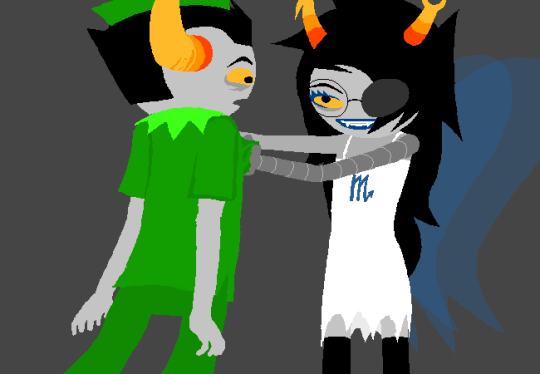
So when Vriska tries to live out her Mindfang fantasy, and rope Tavros along as her Summoner…

image
image

It’s not a coincidence that she dresses up as a fairy, and thinks in terms of a Sylph’s key verb–or close enough to it if you go with Create, same difference. And hey, doesn’t Vriska spend this arc insisting she only wants to make Tavros stronger? Get him to take charge and be powerful? Why, that almost sounds like…

image

What Aranea does effortlessly, by virtue of being a Sylph.

This is legitimate, compelling nuance that is lost under Inversion theory. 
And I can pull it out for close to every character. Dirk, AR, and Terezi’s fixations on being Knights, Roxy’s early flirtations with prophecy, Jake’s occasional references to wizardry, etc. 

There’s a LOT of depth here, is what I’m saying, and in my view, the system is way more flexible and well-executed than what we’ve understood up until now. Even if inversion theory were literally canon (and its not, wp people debunked it YEARS ago.) I don’t think I’d want to trade it for what I see in the system now, personally.