

4) Patron
Terezi as goddess of justice (Themis ). Her posture was very difficult, so I used these images of sculptures as reference.
4) Patron
Terezi as goddess of justice (Themis ). Her posture was very difficult, so I used these images of sculptures as reference.
if you think dirk and jade arent best friends well. heh. youre just wrong
jade dirk and terezi regularly commit crimes together and thats just the truth
“wow dirk how come your mom lets you have TWO girlfriends??” “Actually, they’re dating each other. They just like to solicit me to run around and commit felonies with them”
dirk strider, jade harley, terezi pyrope: enemies of the state
heres an idea: “Komm, Susser Todd” is an amazing vrisrezi angst song–thinkin bout Vriska’s original death and Game Over Terezi’s arc in particular. woops. sorry for the sads!!!
There are many things that cloud the minds of Homestuck’s protagonists. Many things they lean on, that they draw strength from, that they consider a positive influence in their lives, but that nevertheless serve to distract them and poison their hearts and minds. For John, it is innocence. For Karkat, it is the warrior ethos. And for Terezi, it is justice.
Justice drives many of Terezi’s actions and her understanding of the world. It’s how she justifies helping Vriska feed countless to her giant spider lusus during flarp, it’s how she justifies siccing Scratch on Vriska when flarp goes too far, it’s how she describes the nature of doomed timelines and those doomed individuals who originate in them. It’s the language she uses when psyching herself up to personally kill Vriska once and for all.
Justice, to Terezi, is about violence. Retributive violence, a punishment for evil action. It is a way to understand and interact with the world she inherited from Alternia, and it is riddled with the influence of that awful place, with its utter disregard for life, dignity, or any form of mercy. It is a means of justifying murder.
Justice, to Terezi, is a drug, and it is one she only manages to shake once she kills Vriska and finds that in the face of such enormous action its effects as a palliative are lacking. She relapses, of course, wrapping herself in the blindfolded visage of justice when seeking violent revenge on Gamzee, but this no longer brings her strength against his inexplicable juggalo pro-wrestling skills and begins a sequence shortly leading to her death in the Game Over.
Ultimately, Terezi chooses to shed justice entirely, choosing to use John to resurrect Vriska and, critically, to disrupt her initial pretend game of justice during her introduction, symbolically (and, to an extent, actually) freeing her from its curse.
The other big reference to justice that comes to mind: Aimless Renegade immediately prior to blowing some shit up and trying to kill people that end up being his friends.
I think I’m inclined to agree with seeing it as a corruptive influence. I should go through the text and see if it’s bad in every circumstance it shows up in, or if it’s toxic for Terezi in particular as linked to her Knight roleplay.
Either way, really solid point. I dig it!


Someone told me to post this so here it is. Probably my best vocalization yet of the Roleplay mechanic I’ve been talking about, which ties the Ancestors into the Classes and makes the whole system a lot more flexible and comprehensible.
If nothing else I think it’s interesting to consider and discuss, so do let me know if you agree or disagree. Here’s some other examples of Class roleplay I’ve found time to write about:
Dirk, Terezi, Xefros -> Knight
Dave-> Prince
Jane-> Heir
that essay sure was a long way to say i fucking love terezi pyrope
Not enough of the fandom is interested in how Classpects may play into Hiveswap, I think. We’ve gotten lots of hints at the player’s potential Classpects, but there’s a lot of skepticism as to whether Classpects will even show up at all, given that the game doesn’t center around Sburb.
I’m here to argue that they’ll definitely feature in some way. And luckily for all of us, whether or not I’m right here will be incredibly easy to prove!
Our case study will be Xefros Tritoh. But before I explain how we’ll scrutinize Xefros to determine whether or not I’m full of shit, I’ll need to talk about three things:
1) Knights
2) Terezi
3) Roleplay.
When I say “Roleplay”, I am referring specifically to the system I advanced in my series on Classes. But my description of it was scattered and focused, so here’s a quick wrap-up:
In Homestuck, when characters are particularly inspired by or moved to imitate rolemodels, that tends to show up in their mechanical behavior as Heroes. What’s more, such acts of imitation tend to come with references to the specific Mythological Archetypes that inform the Class of the Role-Model figure.
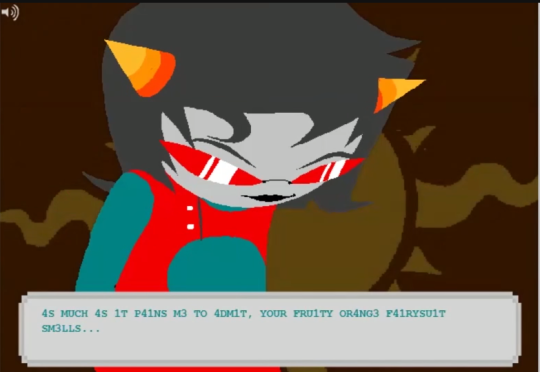
The Troll Ancestors are essentially our introduction to this concept, and there is no clearer example than Vriska. For all of Act 5, Vriska strives to emulate Mindfang in all things–and at the same time, Vriska is consistently depicted and referenced as a Fairy. You can see one such reference above.

As it turns out, Sylphs and Maids share the descriptor of Fairy.
Jane, Aranea, Aradia, Kanaya and Porrim are all referenced as Fairies in different ways, and share a number of visual references linking them to fairies.
So Maids and Sylphs are fairies, according to the Class system. But Vriska is a Thief, and attempting to live out the role of one. One important factor in the Roleplay system is that Roleplaying this way is often misguided and unhealthy, and that players are typically at their happiest and most powerful when playing to their innate strengths.
Compare Vriska’s attempts to make Tavros stronger to Aranea’s effort to do the same for Jake. Both end disastrously, but it’s hard to deny that Aranea had an easier time getting the job done.
We’ll talk about Knights (and Pages, by association) in a bit, but for those of you curious, here are the Archetypes for the other classes that have them:
Knights and Pages, contrary to popular opinion, are best described as the “Serve” class.

As Caliborn suggests when speaking to Jake, to “Serve” has multiple meanings in the context of Class powers. Two of them are relevant to Terezi.
1.Shit son, you just got served.
-Urban Dictionary
The first thing Serve classes are prone to doing is Serving their enemies in brutal defeats.

The second–and nicely bringing us into a description of Neophyte Redglare, Terezi’s mythological idol–is the providing of Service.
Knights are prone towards helping others and serving others’ needs through the use of their Aspects. In Redglare’s case, that means that everything she does is at the behest of the Highbloods–even if she doesn’t agree with their ideology.

But perhaps most interesting for our reading of Terezi isn’t anything Knights do through their powerrs, but a different quirk of the Class. One of the Archetypes for the Knight/Page pair is the historical image of the Warrior, including Warrior Caste’s historical tendency to subscribe to a code of honor.
All the Knights we see in Homestuck adopt a code of honor of some sort, in that they hold themselves up to very high standards of behavior based on a persona they construct in their heads.
For Dave, this is the image of the cool dude. For Karkat, it’s the ruthless leader. For Latula, it’s the R4D G1RL act.
In all three of these cases, the Knights primarily use their personas to distance themselves from their emotions and force themselves into positions of responsibility, even if they’re uncomfortable with their own competence or don’t really want to carry out a particular duty.

Which is exactly what Terezi does when confronted with the need to kill Vriska!
Terezi buries her feelings about Vriska and decides that eliminating her is simply the professional way to resolve the problem–choosing to focus on performing her role as Redglare instead of thinking about her own feelings.

Terezi’s Redglare roleplay, however, might even go farther than the three true Knights–since it even includes a literal code for how to act as a Warrior, that she uses to determine when killing was acceptable.
This code of honor is, of course, Terezi’s idea of JUST1C3.
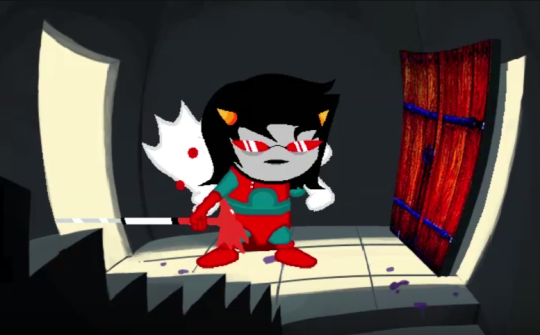
And once Gamzee manipulates Terezi into fully embracing her Redglare persona, Terezi is visually cast as an echo of another Knight–
[S] Seer: Ascend acting as an extended visual callback to Dave’s
[S] Dave: Ascend to the Highest Point of the Building.
Seer: Ascend even starts off with Dave’s symbol!
And the end result of this roleplaying is, of course, as disastrous for Terezi’s being as Vriska’s Mindfang roleplay is for her.
Passing judgment on Vriska leaves Terezi doubt-riddled and self-loathing for years because her true inclinations as a Seer were not to try and go to war for the sake of Justice, but rather to pry, inquire, and discover the truth about Vriska’s nature and feelings. That roleplay misled Terezi from her desires and needs in this respect shows how much of an impact it has in the narrative.
Hopefully this overview gave you an idea of the logic behind it, and if not hopefully looking at other examples I’ve written in the links above–such as
Rose as a Witch, Jane as an Heiress, or Dirk as a Knight–
will illustrate further.
Now. Let’s get to Xefros.


Xefros is interesting here primarily because of his interest in Butlering.
The Butler is the second Archetype that informs Knights and Pages, and it covers the Service connotation as well, but it also includes
last definition of the Serve verb:


To give. As a counterpoint to Thieves and Rogues–who Take–Knights have a tendency to give others their Aspect, or give others things through their Aspect. Much as a Butler offering a plate of food. Davesprite giving John a hammer with Time powers is a prime example.
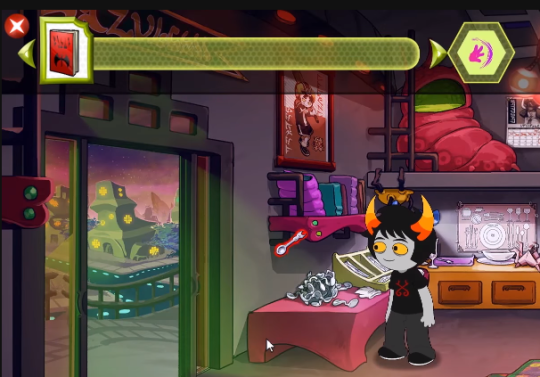
And on top of being interested in one of the biggest symbols of a given Class in the comic, Xefros also comes with one free FLARP manual, it seems.
Flarp being the same book that marked the impact of Roleplay and Mythological Archetypes on Vriska and Terezi, this is relevant to me.
So my premise is simple. If the Classpect system has any weight in Hiveswap, odds are very good we’ll see Xefros display similarities with Knights in some way.
(I say Knights and not Pages because Pages seem to have a knack for inspiring those around them to do the serving, whereas Knights seem much more inclined to be serving others–and Xefros is definitely interested in doing the serving.)
But there is a catch here.
Apparently, becoming a Butler is Xefros’ ambition.
But that seems a bit odd, considering he’s also a rebel fighter.
So the question is: Is Xefros a Knight, or is this interest in serving (presumably the elite of Alternia?) going to prove to be unhealthy for him?
In other words: Is this an indication of Xefros’ true Classpect?
Or is it a case of Roleplay?
I think it could go either way at this point. Of course, it’s also possible I’m reading into stuff too much and there’s nothing here but coincidences–in which case, Xefros will exhibit nothing particularly related to Knights or Pages or possibly any Classpect stuff at all.
But to be honest, I doubt that. I am, however, very interested in testing this guess, and I hope you’ll all at least be interested in holding me up to scrutiny, too.
That’s all for now. Feel free to drop by on r/Hiveswap’s reddit and Discord if you’d like to ask questions about this, or just jam about Classpects or other cool stuff in general.
Keep Rising.


This section is pretty much setup for the next three essays. There’s a couple sections here that I have a fair bit to say about, but probably just as many where I’ll close out with some minor observations, or reference to someone else’s Good Post™.
What I think is important is noting the consistency and similarity with which Homestuck engages in meaningful reference. I just want you to have this list in mind as I flesh out the three truly impactful references I want to talk about in this series.
So here’s a short list of cases where Homestuck outright leans on other stories to structure itself, with accompanying references:
1) The Game Over Arc – Plot Structure & Dragon Ball Z
We’re starting with Dragon Ball Z because the references here are relatively simple and straightforward, and they largely set up either pretty clear structural parallels, rather than thematic ones.
The clearest of these examples is the section of the story that begins with the joke Arquius makes above. In case you don’t know, the “over 9000″ meme has its roots in this iconic, hilarious sequence from DBZ:
What’s notable is what follows. From the moment this joke happens, the very structure of Homestuck changes to following the loose structure of some of the most memorable DBZ arcs.
I’m no buff on the series, but the memories it calls up for me most strongly resemble the Namek/Freeza or Buu arcs, and expert DBZ consultant @alotofmomos (who hates me for writing this) confirms these are the arcs that most perform the particular structure Homestuck will now be mimicking.
And what does that structure consist of? A particular mix of “pacing” choices, cinematography, and sheer scale of spectacle that I find hard to source to anything but DBZ. I can’t even think of other Shonen series that mix all these elements in quite the same way, though again, I’m no expert.
Some of these elements are:
A) Drawn out, massive power-up sequences:


B) Conflicts that carry out on planetary scales, and indeed often destroy the planets hosting them.

This pretty much speaks for itself, doesn’t it? Do I really have to say some stuff to make it look like I’m doing anything other than pointing out some obvious goddamn parallels that blew my mind because they took me years to notice?
Alright, fine. I’ll say this much: I think it’s quite fitting that Homestuck would borrow from the DBZ playbook for the section of the story that illustrates the sheer mind-boggling scale of power our protagonists have reached.
There’s very few stories out there that demonstrate this sense of mortals achieving such bonkers dominion over reality through sheer force of will, and the homage certainly hammers home the idea that these kids are Gods with levels of power we’ve barely scratched the surface of.
But I don’t think there’s a big Narrative Payoff to this particular reference. Instead, I think what Homestuck takes from this is functional in terms of narrative. Because the most interesting things this narrative model adopts are structural.
C) Convenient plot-structure.
Namely, what we end up with is a bunch of characters grouped into disparate conflicts across the same larger “playing field”, separated by considerable amounts of distance–and thus, isolating them into distinct narratives.

As a natural consequence of this, the pacing slows down to an excruciatingly slowness, as we cut from conflict to conflict, each one progressing in small snippets of minutes or even seconds at a time. All of this is par for the course for Dragon Ball Z, particularly in the Namek saga.
So what this provides us with isn’t a profound, revelatory moment of thematic meaning–but instead, an effective backdrop on which to flesh out that meaning elsewhere. In fact, this very arc does that like twice with two other stories!
So let’s move on from this and take a look at a couple of character arcs whose resolutions are telegraphed by way of reference.
2) Terezi as Dorothy


I don’t have too much to add to this, but it’s useful because in the eyes of much of the fandom, it’s already accepted. Check out madchen’s excellent post on the subject here.
The bottom line is: Terezi janks Jade’s shoes, and adopts the role of Dorothy in Homestuck’s symbol logic. This leads her home–to Vriska and their memories of growing up together, and ultimately to embracing her red feelings for her.
Terezi’s resolution is one of two relationships resolved in the wake of [S] Game Over. Let’s take a look at the other.
3) Jake as Buttercup

Don’t have much to say about this one either, cause I already wrote most of it.
I will say I don’t think it’s an accident that the arcs to coincide here are Dirkjake’s and Vrisrezi’s, since the two relationships are in many ways direct parallels. But that’s another essay for another time.
I have received some rightful criticism on my writing on Jake in particular, and this is a good place to clarify my position, however. I do not think it’s particularly “Good” or “Healthy” for Jake to indulge his own desires at the expense of Dirk’s (or Jane’s) feelings.
My point has never been that Jake’s selfish behavior is inherently good–merely that Jake’s reasons for being in love with Dirk are his own, and not imposed to him from Dirk himself, or anyone around him.
As with all things in Homestuck, the key is for Jake to grapple with the negatives in himself and come to balance with the tension between his own wants and his relationships with others. This is true of literally everyone in Homestuck.
And there’s an easier way of saying what I am getting at. Because Homestuck literally gives us a guidebook to understanding Jake and Dirk’s relationships to each other, as parsed in Jake’s head–a guidebook that provides context to their entire relationship.
Just as you can read Terezi as Dorothy, so too can you read Jake as Buttercup. This is the crucial distinction I seek to make. In common readings of Dirk and Jake’s relationship, Jake acquiesces to Dirk’s pushy forcing of the relationship despite Dirk’s control issues.
In this one, Dirk is a flawed but committed provider and protector, and Jake picks up on and begins internalize a belief that Dirk will always be there for him, prompting him to fall for him. This reflects the fundamental core of their attraction to each other. It does not present a solution to their communication issues.
They both have to work through that and be more aware of each other’s needs.
Now, The Princess Bride is a comedy action-adventure movie, but it’s also a philosophical fairy tale. Buttercup and Westley aren’t just in love, they’re in True Love, and the driving force of the movie is how Westley’s love empowers him to do anything it takes for his beloved.
What’s more interesting is Buttercup’s relationship to that same love, and how it reflects on Jake. Buttercup has to struggle to learn how to believe in True Love, even when it seems difficult or even impossible. Along the way, Buttercup is even forced into an arranged marriage, and seemingly forsakes her feelings for Westley to avoid the consequences of being honest, a choice she then tortures herself over.
A big part of her journey is learning to truly commit to not just Westley’s love for her, but her belief in that love as something both true and powerful. Something that can transcend all odds and obstacles.

Which is. You know. Exactly what Jake does when he’s fully immersed in the power of his own faith.
Now let’s move on, and note two more movie references that the comic makes outside of the context of this DBZ-mini arc.
4) Tavros as Peter Pan

There’s not a terrible amount of depth to be drawn here, either. I think most people accept that Tavros is deliberately invoking Peter Pan in his narrative victory here, with the ghosts as his Lost Boys. I will add, however, that if Peter Pan is the role Tavros is emulating in reaching his full potential, well…
Peter Pan isn’t exactly known for being Selfless, is he? He’s a hero, for sure, but self-centeredness is pretty much his calling card as a hero. To the point that Wikipedia claims that
“In the play and book, Peter symbolizes the selfishness of childhood, and is portrayed as being forgetful and self-centered.”
More fuel for the fire as far as my writing on Tavros as inherently self-centered in his building of the Ghost Army goes. Anyway, the fundamental reference is secured, right? I’m not really looking to make a Classpect argument here, I’m just compiling interesting notes. Let’s move on.
5) Caliborn as Jigsaw
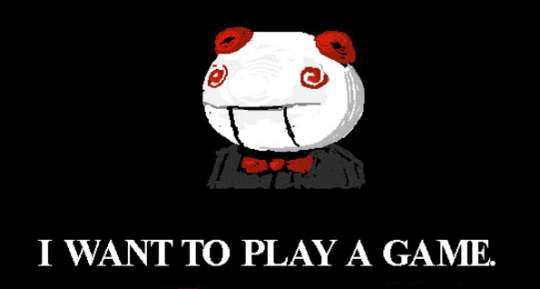

This one isn’t exactly subtle, either. I’ve already written quite a bit about how Lord English defines and dominates everything in the story of Homestuck, as have others.
Understanding Caliborn as a Yaldabaoth is one way to contextualize his power over the reality all the characters preside over, and we’ll definitely touch on that further in the next three sections I’ll be covering.
But one easy way to contextualize Lord English’s power is as…well…Jigsaw.
Like Jigsaw, Lord English builds a massive, highly controlled gauntlet that he exploits and terrorizes his victims through. The only difference is that Lord English’s dungeon is bigger than some creepy gray cellar.
It is in fact, Literally Everything that occurs within the context of the Alpha Timeline. Every homeworld that every character originates from–except for, arguably, Beforus, which is still under his sway enough to be doomed, but also presented as borderline Eden-like by comparison to Alternia.
While Yaldabaoth’s control seems very distant and abstract, Jigsaw’s is crystal clear and vicious. Everything the characters of SAW suffer is, ultimately, in the hands of the orchestrator of their misery. Their puppetmaster, so to speak.
In the same sense, pretty much every single way the characters in Homestuck suffer has Lord English at the root of it–even the thing they do to themselves and each other as a result of cultural memes.
Troll Violence, heteronormativity, quadrant normativity, and hypermasculinity–all are memetic structures that exist because Lord English himself disseminated them, in the context of Homestuck. They’re thought-traps rather than literal physical torture devices, but they’re torture tools all the same.


And you can even see Jigsaw as a symbol for Lord English’s influence, since it is, after all, one of the primary differences setting apart Bro and Dirk. Dirk has no interest in the SAW franchise at all, whereas Bro makes a point of mocking Dave with it. (thanks to @jadedresearcher for pointing this out, by the way!)
So yeah. Not only does SAW tell us a lot about the nature of Caliborn’s effect on our characters through the Alpha Timeline, it also acts as a mark for his influence. That’s…pretty much all there is to say on the matter.
For now.
That wraps up this little introductory round-up. Now I can get to talking about three of the biggest influences on Homestuck as a story:
The Neverending Story (the book), Earthbound & Mother 3, and Gnostic Myth.
Hope you’ll follow along with us over the next couple of weeks to find out more.
Catch you on the flip side.
Keep rising.


 Flying through Storytelling